

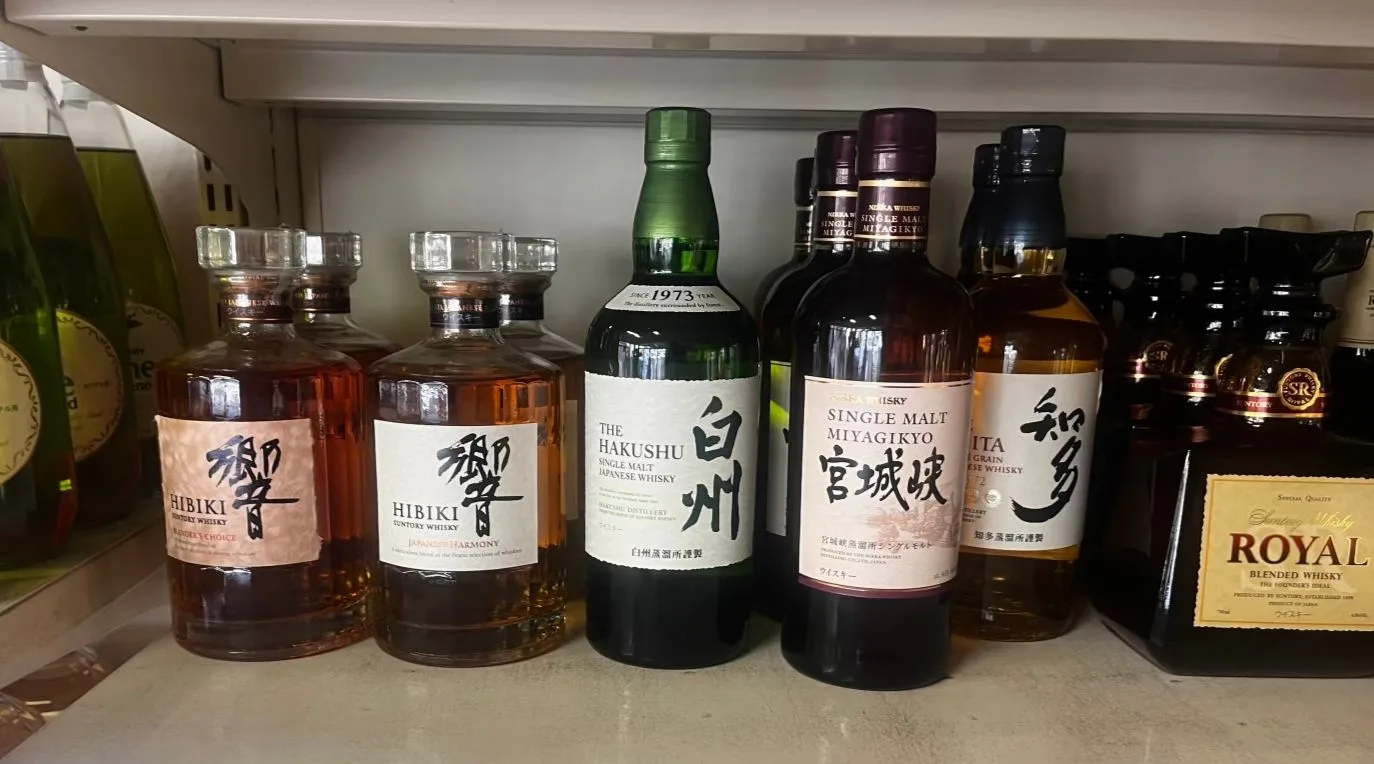
Commercial beverage procurement across North America requires a strict distinction between standard 700ml export packaging and documented 750ml bottle formats. For Canadian commercial importers and provincial liquor boards, securing Japanese whisky 750ml bottles maintains full alignment with federal net-quantity regulations, regional barcoding, and established listing configurations. The House of Suntory’s core portfolio—Hibiki Japanese Harmony, Yamazaki 12 Year Old, and Hakushu 12 Year Old—represents the benchmark of Japanese craftsmanship in high commercial demand across licensed channels.
Navigating commercial acquisition demands verified technical data regarding bottle capacities, outer case dimensions, and jurisdictional registration numbers. Identical nominal bottle sizes do not imply uniform case packing, as commercial shipping cases vary between six and twelve units depending on the expression and destination market. Zeki Frucht GmbH operates as an independent international sourcing company in Vienna, Austria, sourcing genuine spirits against confirmed commercial purchase orders directly through verified Japanese trade networks and secondary European wholesale channels.
House of Suntory Heritage and Production Integrity
Commercial procurement of Japanese spirits requires an understanding of the heritage and blending philosophies underpinning each label. Blended Japanese whisky and single malts from Suntory reflect a century of traditional distilling methods adapted to Japan’s distinct microclimates. Factual brand identity provides valuable context for commercial documentation, marketing authorization, and provincial board registration.
Visual records of production integrity reinforce the distinction between authentic Japanese manufacturing and modern contract blending. Importers must confirm that each commercial consignment complies with regional import frameworks and authentic manufacturer trade parameters before finalizing logistics routes.
Hibiki Japanese Harmony 750ml Commercial Profile
Hibiki Japanese Harmony represents the foundation of Suntory’s blended portfolio, combining mature grain and malt distillates into an integrated commercial profile. Sourcing this blended Japanese whisky in the 750ml format satisfies North American retail specifications while preserving the packaging design created by Suntory’s blenders. Importers must distinguish Japanese Harmony from specialized airport editions such as Hibiki Master’s Select, or aged releases including Hibiki 12, Hibiki 21, and Hibiki 30.
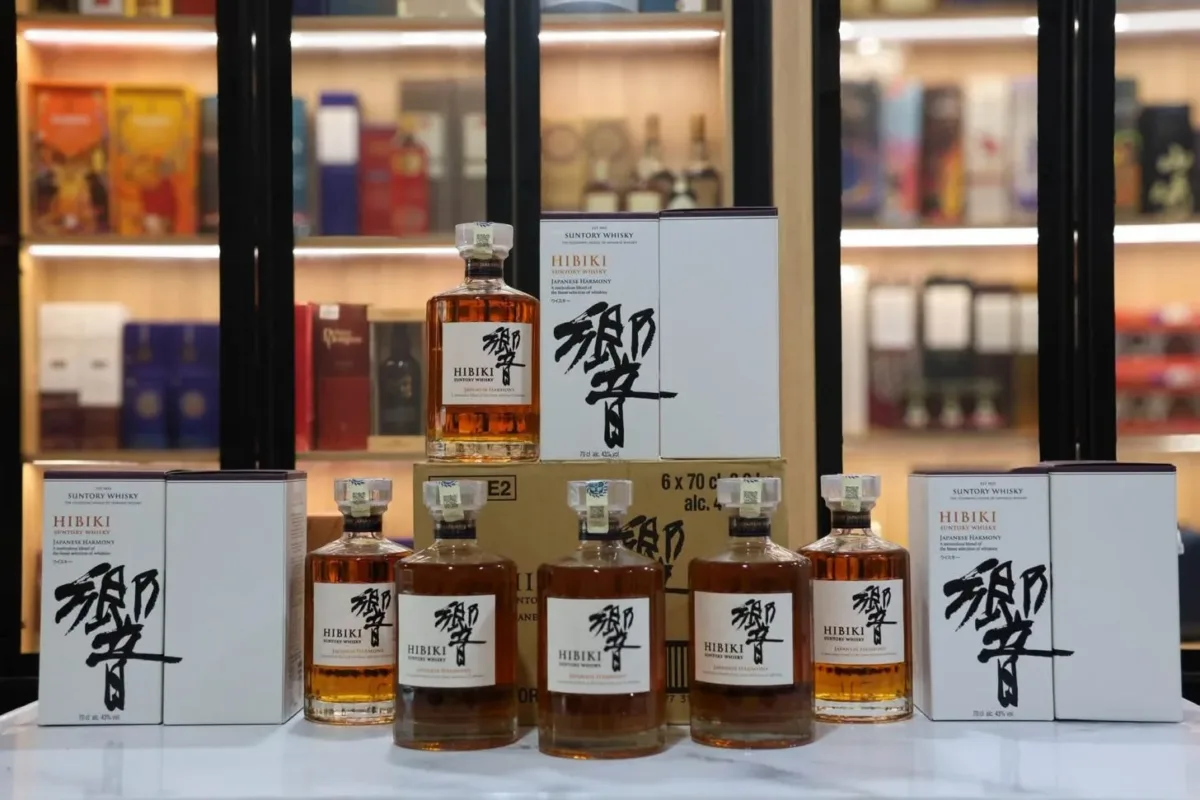
The 24-faceted bottle design corresponds to the traditional Japanese seasonal calendar.
The spirit blends single malt whiskies produced at the Yamazaki and Hakushu distilleries with continuous-distilled grain whisky from the Chita distillery in Aichi Prefecture. Bottled at 43% ABV with no formal age statement, the liquid rests in a bottle whose 24 facets represent the traditional Japanese sekki lunar seasons. The label uses handcrafted Echizen washi paper, requiring climate-controlled shipping to preserve its textured visual presentation.
North American market records document a standard commercial case configuration of six bottles per case, yielding 4.5 net litres of beverage per shipping unit. In commercial registration systems, this expression appears under Utah product code 015980 and Ontario LCBO reference 481226. These administrative identifiers serve regional inventory systems and must not be confused with universal global manufacturer barcodes.
Yamazaki 12 Year Old 750ml Single Malt Specifications
Yamazaki 12 Year Old represents Japan’s pioneer single malt, produced at the Yamazaki Distillery located in Shimamoto, Osaka Prefecture, established in 1923. As a Japanese single malt, every component of the distillate originates from malted barley processed in copper pot stills at a single distillery site. Commercial buyers must carefully separate this standard 12-year expression from Yamazaki Distiller’s Reserve, Yamazaki 18, and limited 100th Anniversary bottlings.
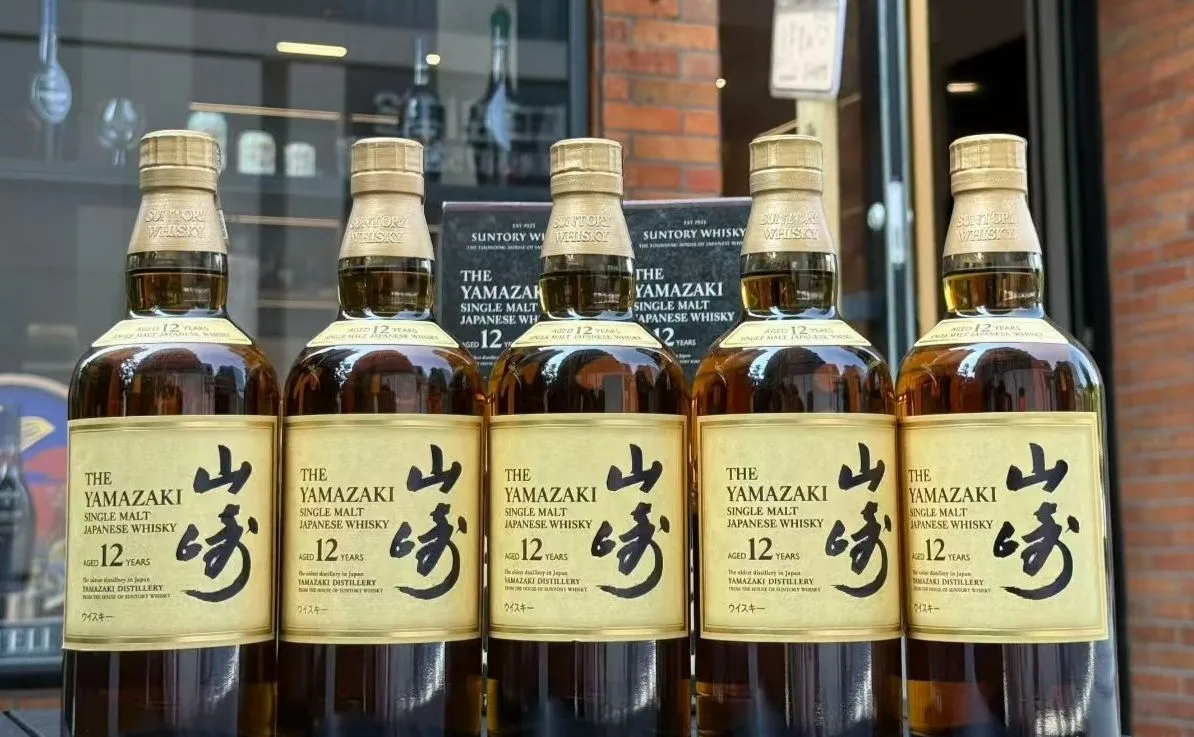
Yamazaki 12 Year Old utilizes oak maturation across multiple cask wood varieties.
The production process utilizes diverse pot still geometries and a complex maturation strategy incorporating American white oak, Spanish sherry casks, and rare Japanese Mizunara oak. Bottled at 43% ABV, Yamazaki 12 carries an official age statement certifying that every drop of liquid matured in wooden casks for at least twelve years. The resulting spirit delivers balanced notes of dried fruit, honey, and subtle Japanese temple incense derived from the Mizunara oak.
Documented United States regulatory registers confirm a shipping case configuration of 12 bottles per case, representing 9.0 net litres of finished beverage. In administrative databases, the expression is catalogued under Utah code 015996 and Ontario LCBO reference 23140. Importers must verify the exact packaging format with suppliers, as European 700ml allocations generally arrive packed in six-bottle cartons.
Hakushu 12 Year Old 750ml Single Malt Specifications
Hakushu 12 Year Old originates from the Hakushu Distillery, founded in 1973 deep in the forests of Mount Kaikoma within Yamanashi Prefecture. Known as Suntory’s mountain forest distillery, the facility operates at an elevation exceeding 700 metres, using soft, mineral-filtered snowmelt water from the Southern Japanese Alps. Licensed buyers must distinguish Hakushu 12 from non-age-statement Distiller’s Reserve, Hakushu 18, and commemorative anniversary expressions.
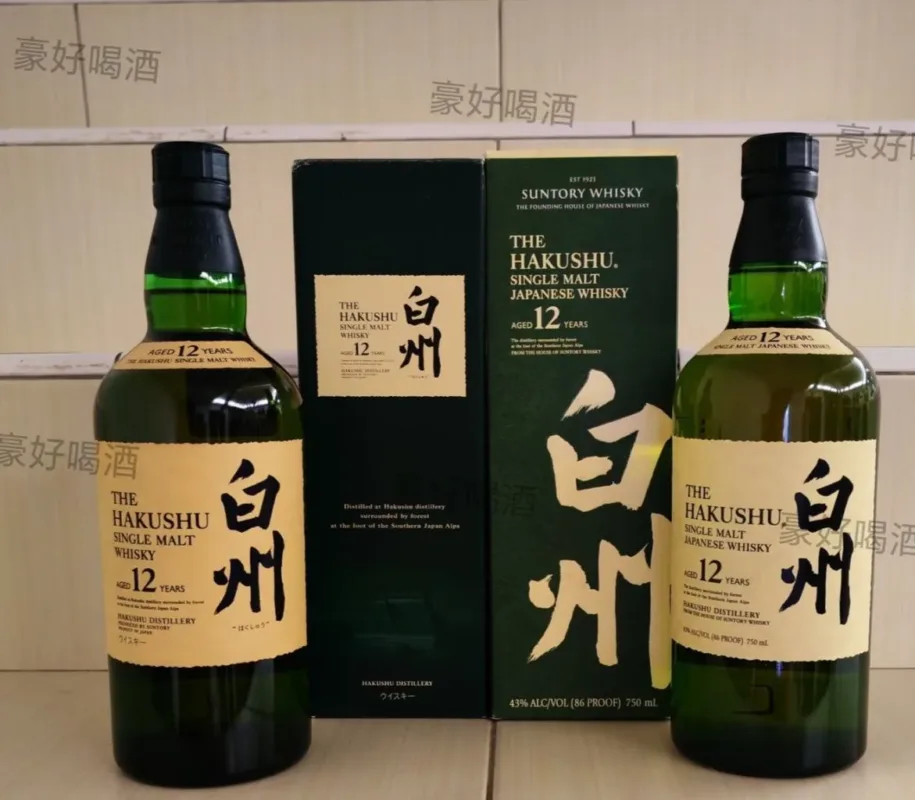
Hakushu 12 reflects the microclimate and mountain water of Yamanashi Prefecture.
The distillation utilizes unpeated and lightly peated malt batches fermented in wooden washbacks that support local microflora, creating a crisp, herbal profile. Bottled at 43% ABV, the single malt matures for twelve full years in a humid mountain climate characterized by significant seasonal temperature variations. The finished liquid presents delicate smoke, green apple, mint, and pine needles without the heavy medicinal phenolic weight typical of coastal Scotch whiskies.
The standard regulatory case configuration for the 750ml packaging in United States jurisdictions comprises 12 bottles, providing 9.0 net litres per shipper. Identified under Utah product code 016002 and Ontario LCBO product reference 41984, the physical presentation cartons and outer cardboard weights must be checked prior to transport consolidation.
Master Technical Specifications: House of Suntory 750ml Portfolio
Wholesale logistics planning relies on verified unit metrics, case pack volumes, and manufacturing origins. The following data collates verified product identity characteristics alongside documented North American state regulatory records. These specifications allow warehouse operations to calculate volumetric cargo dimensions, excise liabilities, and consignment weights accurately.
| Expression | Whisky Category | Age Statement | Bottle Capacity | Alcohol Content | Documented Case Pack | Net Litres | Manufacturing Origin |
| Hibiki Japanese Harmony | Blended Whisky | No Statement | 750ml | 43% ABV | 6 Bottles | 4.5 Litres | Japan |
| Yamazaki 12 Year Old | Single Malt | 12 Years | 750ml | 43% ABV | 12 Bottles | 9.0 Litres | Japan |
| Hakushu 12 Year Old | Single Malt | 12 Years | 750ml | 43% ABV | 12 Bottles | 9.0 Litres | Japan |
The recorded case quantities reflect official listings published in the Utah Department of Alcoholic Beverage Services February 2026 price register. While these listings demonstrate regulatory standards for North American 750ml stock, commercial packaging may vary between specific supplier contracts. Buyers should confirm exact packing notes before authorizing international air or ocean freight bookings.
Provenance Atlas Part 1: Volume Metrics and Alcohol Yields
Understanding the volume variance between international market formats prevents costly errors in customs clearance, duty assessment, and inventory management. European and domestic Japanese markets rely predominantly on 700ml bottles, whereas the North American standard requires 750ml containers. For technical comparisons regarding alternative regional packaging, review our documentation on Japanese whisky product specifications for Asian markets.
| Packaging Format | Unit Beverage Volume | Pure Alcohol at 43% ABV | Standard Case Beverage Volume | Calculated Volume Differential |
| 700ml Bottle | 0.700 Litres | 0.3010 Litres | 4.200 Litres (6-pack) | Baseline format |
| 750ml Bottle | 0.750 Litres | 0.3225 Litres | 4.500 Litres (6-pack) | +7.14% per bottle |
| 750ml Shipper (12) | 0.750 Litres | 0.3225 Litres | 9.000 Litres (12-pack) | +114.28% over 6x700ml |
A 750ml bottle yields exactly 7.14% more beverage and pure alcohol than a standard 700ml unit. Because Canadian federal excise duties apply per litre of absolute ethyl alcohol, this differential directly alters the payable duties upon border entry. Customs declarations submitted with incorrect net litres risk customs audits, administrative penalties, and clearance delays at maritime ports of entry.
Provenance Atlas Part 2: Commercial Packaging and Hierarchy
Traceability across high-value spirits logistics relies on maintaining strict packaging hierarchies from the production facility to the commercial consignee. Commercial buyers must verify every level of packaging documentation to prevent mismatched barcodes during distribution check-in. Discrepancies between individual bottle codes and master case labels disrupt provincial warehousing systems.
- Retail Primary Container: The individual glass bottle bearing the brand label, 43% ABV declaration, 750ml metric capacity, and bottle UPC-A or EAN barcode.
- Individual Presentation Carton: The secondary protective cardboard carton supplied with individual bottles, carrying matching graphic design and barcode markings.
- Outer Commercial Shipping Case: Heavy-duty corrugated cardboard master carton holding six or twelve bottles, printed with shipping marks and the Global Trade Item Number (GTIN-14).
- Provincial Regulatory Code: Market-specific item codes assigned by provincial regulators such as the LCBO or AGLC, utilized strictly for regional purchase orders and tracking.
- Production Lot Identification: Laser-etched or ink-jet alphanumeric batch codes stamped onto the glass heel or capsule neck, providing complete manufacturing provenance.
Outer case configurations established in one regional register cannot be assumed for all Canadian commercial deliveries. Sourcing through alternate wholesale channels occasionally yields different carton geometries depending on whether original export cases or repackaged consolidations are supplied. Exact GTIN numbers must be gathered from supplier invoices rather than truncated database listings.
Provenance Atlas Part 3: Palletization and Cargo Documentation
Pallet configurations for North American 750ml Suntory spirits require custom verification prior to transport dispatch. Sourcing teams cannot simply adopt standard European 700ml pallet specifications, as bottle heights, diameters, and carton thicknesses differ between market lines. To compare continental handling formats, refer to our analysis of Japanese whisky 700ml commercial packaging for Switzerland.
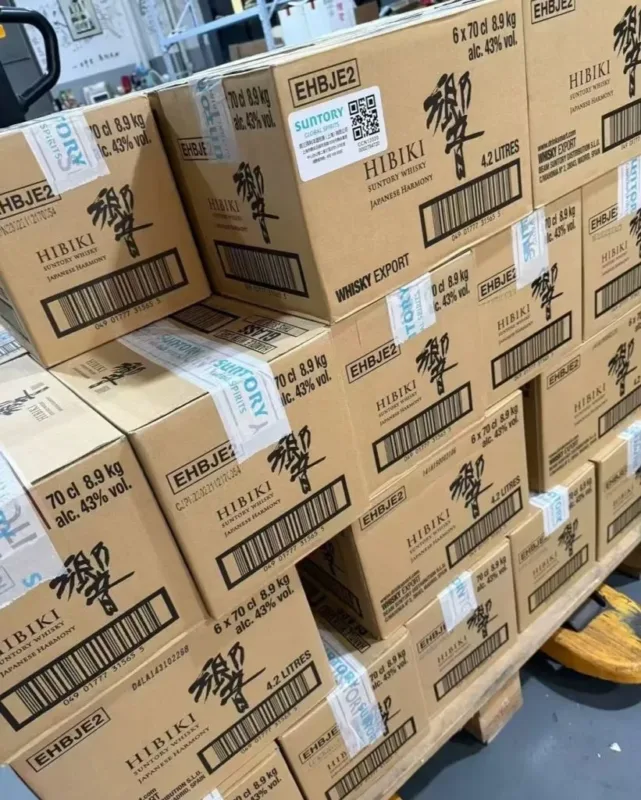
Pallet layouts require verified layer configurations to prevent transit crushing.
Unverified physical stacking leads to crushed lower layers, presentation carton damage, and freight rejections at provincial distribution hubs. Sourcing agents must demand a formal packing specification from the consolidating warehouse before freight forwarders issue shipping instructions. Cargo insurance adjusters require documented confirmation that pallet loads comply with international carrier weight limits.
- Bottles per Carton: Confirm whether outer cartons contain 6 or 12 individual bottles.
- Cartons per Layer (Tie): Document the exact interlocking arrangement of cartons per pallet tier.
- Layers per Pallet (High): Verify maximum stacking height to avoid exceeding vertical load tolerances.
- Total Cartons per Pallet: Confirm aggregate case count to calculate exact manifest beverage volume.
- Pallet Base Standard: Specify whether cargo rests on standard 1000x1200mm industrial pallets or 800x1200mm Euro-pallets.
- Gross Cargo Weight: Calculate total combined weight including glass, liquid, timber pallet, and outer packaging.
- Presentation Box Protection: Verify that master shippers contain internal honeycomb dividers protecting individual gift cartons.
Provenance Atlas Part 4: Distillery Provenance and Production Matrix
Commercial traceability requires drawing clear distinctions between the physical country of distillation, the specific distillery, and intermediate dispatch hubs. The House of Suntory manages an integrated network of distilleries, allowing blenders to combine spirits with distinct maturation and distillation parameters. High-value spirits buyers evaluate these details within the wider portfolio of alcoholic drinks to verify authentic manufacturing origin.
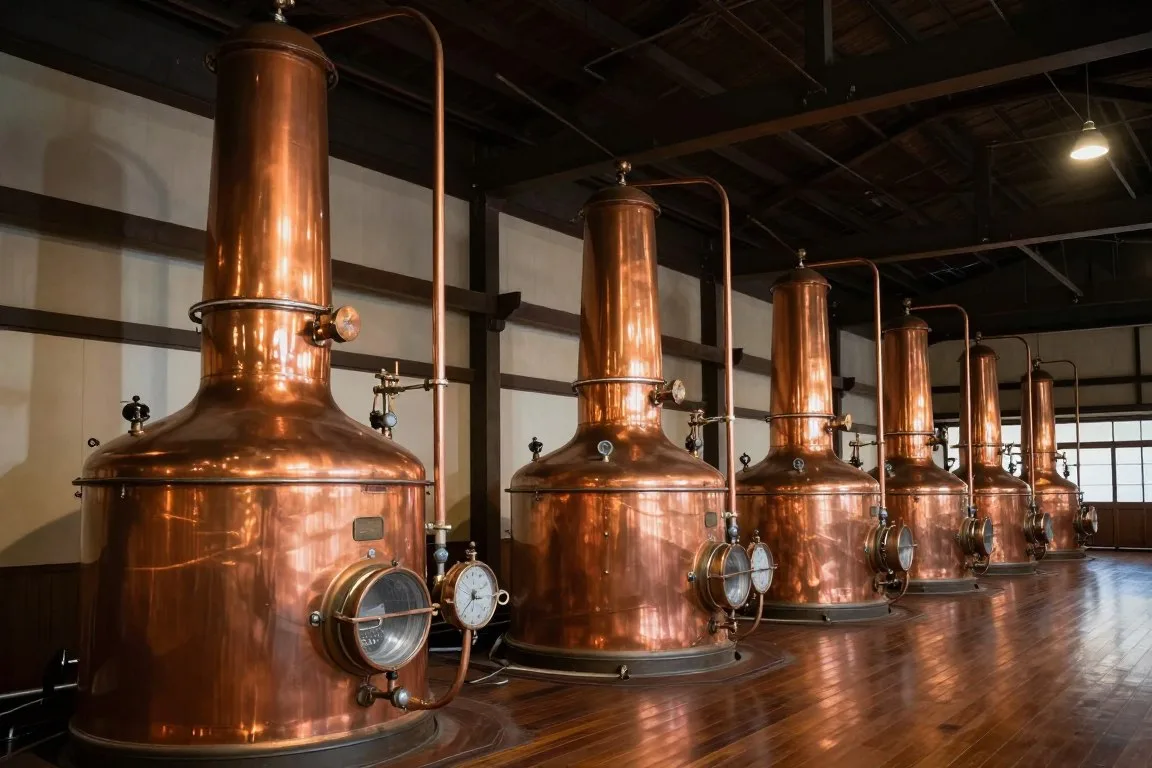
Copper pot stills of varying neck shapes produce distinct single malt spirit profiles.
- Yamazaki Distillery: Located in Shimamoto, Osaka; uses soft bamboo-filtered water and diverse copper pot still designs.
- Hakushu Distillery: Located in Hokuto, Yamanashi; high-altitude facility utilizing alpine snowmelt water and peated malts.
- Cask Provenance: Matured in regional warehouses utilizing American white oak, Spanish oak, and native Japanese Mizunara.
Single Malt Distilleries
- Chita Distillery: Located in Chita Peninsula, Aichi; continuous multi-column distillation of light, medium, and heavy grain spirit.
- Omi Maturation Facility: Supplementary aging warehouses supporting complex climate-driven maturation programs.
- Blending and Bottling: Master blenders harmonize mature distillates before final dilution and bottling across Japanese facilities.
Grain and Blending Facilities
Manufacturing origin remains strictly Japanese, regardless of where commercial consignments are warehoused prior to export. When consignments dispatch from bonded logistics hubs in Europe, the legal country of origin declared on customs forms remains Japan. Sourcing documents must reflect this provenance accurately to prevent regulatory discrepancies during CBSA customs clearance.
Canadian Import Trends for Japanese Whisky Under HS 220830
Customs data reflects sustained commercial activity for Japanese spirits across Canadian borders. Official trade statistics compiled by the World Bank World Integrated Trade Solution (WITS) under Harmonized System code 220830 (Whiskies) illustrate the scale of Japanese whisky imports into Canada over recent annual cycles. These statistics capture aggregate whisky trade values and volumes entering through all Canadian ports.
| Calendar Year | Import Value (USD) | Recorded Volume (Litres) | Calculated Value per Litre (USD) | Annual Value Growth |
| 2024 | $5,881,210 | 484,733 Litres | $12.13 per Litre | Baseline period |
| 2025 | $7,143,390 | 670,997 Litres | $10.65 per Litre | +21.46% Value Growth |
Between 2024 and 2025, Canadian whisky imports originating from Japan expanded by approximately 21.5% in total value, while import volume rose by over 186,000 litres. These macro trade figures encompass the entire whisky tariff line, including mass-market blends, premium craft labels, and high-value single malts. They illustrate healthy commercial channel capacity rather than guaranteed sales quotas or brand-specific allocations for individual retail operators.
Canadian Provincial Liquor Distribution Systems
Distributing beverage alcohol in Canada requires compliance with provincial monopolies and regulatory authorities. Unlike the three-tier system operating in the United States, each Canadian province exercises direct legislative control over the importation, warehousing, and wholesale sale of spirits within its borders. Commercial buyers cannot bypass provincial liquor boards, nor does product registration in one province confer distribution rights in another.
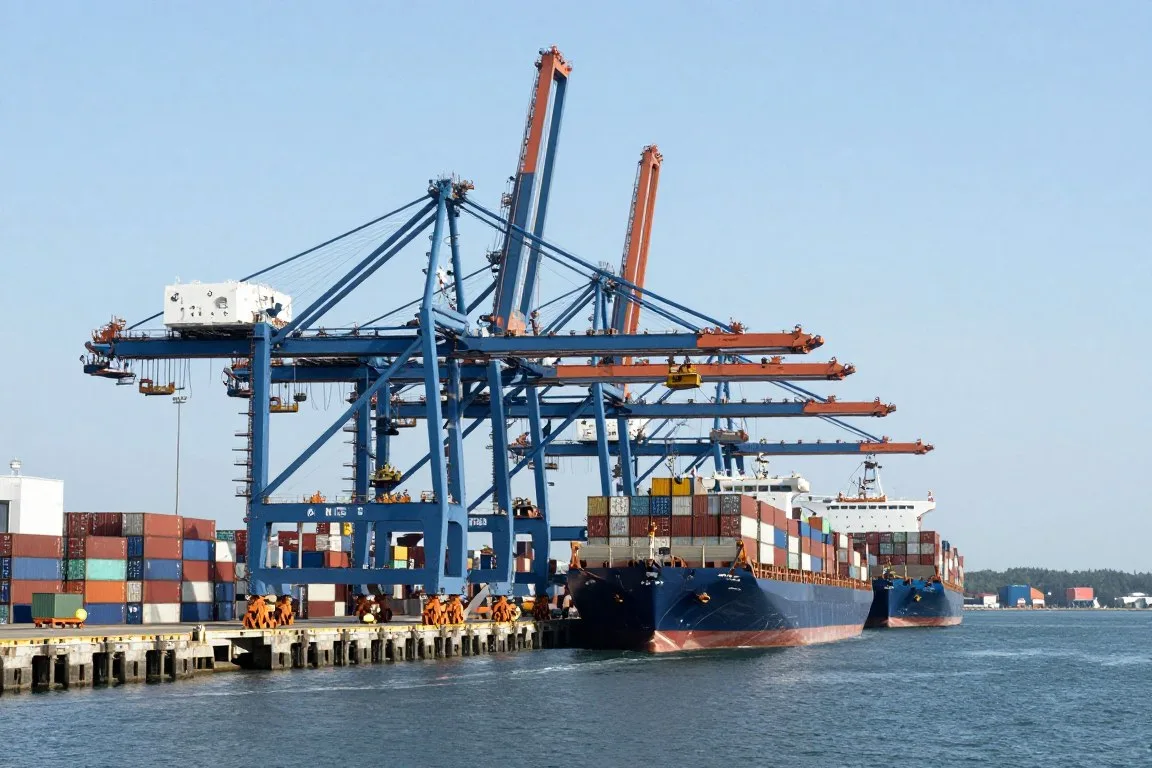
Maritime container cargo enters Canada through regulated provincial clearance channels.
Alberta AGLC Consignment Model
In Alberta, the Alberta Gaming, Liquor and Cannabis (AGLC) agency oversees spirits distribution through a privatized retail system. All imported spirits must be registered with AGLC by licensed liquor agencies representing authorized suppliers on a consignment basis. Consignment stock remains housed in central bonded warehouses until ordered by independent retailers.
Government Board Monopolies
Ontario’s Liquor Control Board of Ontario (LCBO), British Columbia’s Liquor Distribution Branch (BCLDB), and Quebec’s Société des alcools du Québec (SAQ) operate centralized purchasing monopolies. Importers must secure formal product listings or specialty consignment approvals before commercial shipments enter provincial storage facilities.
Agencies representing foreign brands in Alberta must execute formal Letters of Understanding and secure supplier Letters of Authorization. Sourcing agents coordinate with registered provincial agencies to verify that commercial quantities comply with provincial purchase orders before maritime dispatch.
Japanese Whisky Labelling Standards and JSLMA Compliance
The global reputation of Japanese whisky led the Japan Spirits and Liqueurs Makers Association (JSLMA) to implement clear manufacturing and labelling standards. While JSLMA regulations operate as voluntary industry guidelines rather than statutory national criminal laws, compliance has become a universal benchmark for commercial credibility. Major producers, including Suntory Global Spirits, actively enforce these standards across their export portfolios.
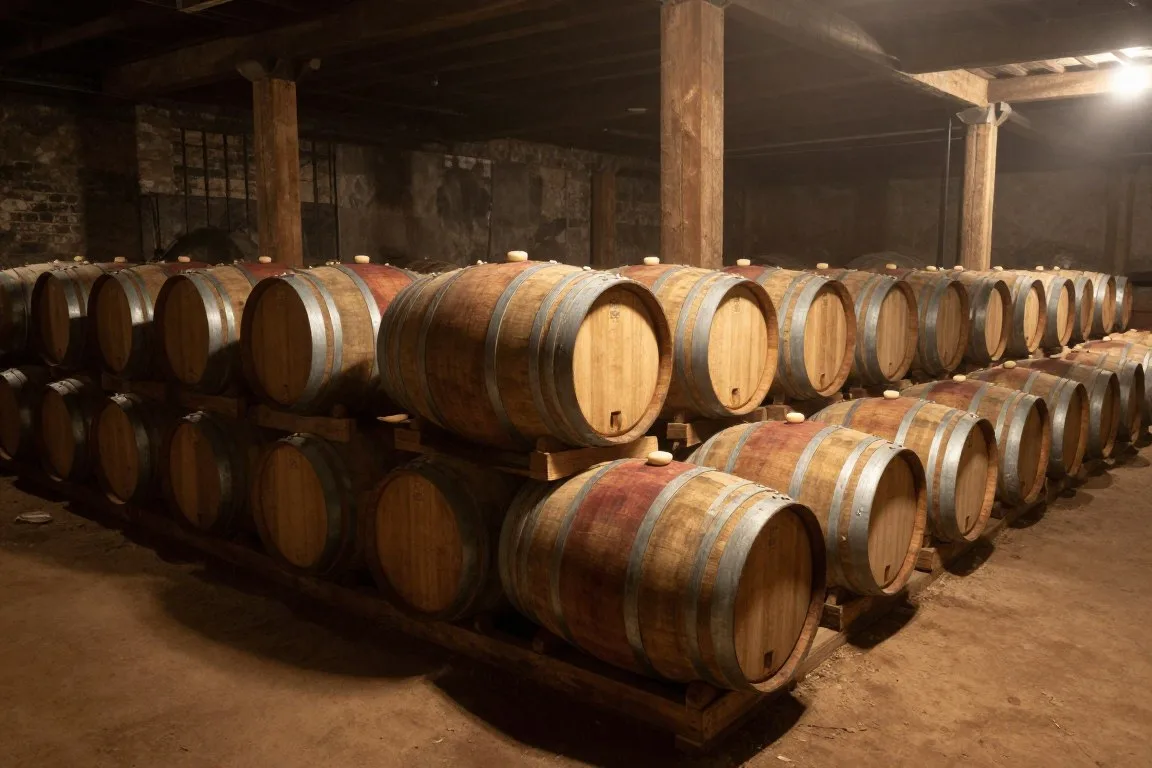
Maturation in wooden casks for a minimum of three years is required under JSLMA rules.
- Raw Grain Ingredients: The spirit must be produced using malted cereal grains, with the mandatory inclusion of malted barley; non-cereal fermentables are prohibited.
- Water Provenance: All water utilized during mashing, fermentation, and final bottling dilution must be extracted from natural sources within Japan.
- Domestic Production: Saccharification of grain, fermentation, and distillation must be executed entirely at an authentic distillery facility located within Japan.
- Distillation Proof: The alcoholic wash must be distilled to a strength below 95% ABV to preserve distinctive aromatic congeners from the source grains.
- Wooden Cask Maturation: The unaged distillate must mature in wooden barrels not exceeding 700 litres in capacity inside Japanese bonded warehouses for at least three full years.
- Bottling Strength: The final product must be bottled within Japan at a minimum strength of 40% ABV, declared accurately on commercial export documentation.
Hibiki Japanese Harmony, Yamazaki 12 Year Old, and Hakushu 12 Year Old fully comply with every tenet of the JSLMA standard. Sourcing these expressions provides licensed importers with documented verification that the spirit represents 100% authentic Japanese distillation rather than imported bulk spirit rebottled under Japanese branding.
Distillation Craftsmanship at the Yamazaki Distillery
Distillery craftsmanship defines the value proposition of aged Japanese single malts. At the Yamazaki facility, diverse copper pot still designs and traditional washbacks support the creation of multiple distinct whisky styles within a single location. Authentic footage illustrates the environmental conditions and wooden cask aging regimes that characterize Suntory’s core production facilities.
Reviewing authentic operational methods assists commercial purchasing directors in verifying provenance claims during supplier audits. Genuine craftsmanship details reinforce commercial presentation standards when liaising with institutional beverage buyers and provincial product category managers.
Canadian Federal and Provincial Regulatory Compliance
Importing commercial spirits into Canada requires adherence to both federal consumer packaging laws and provincial liquor board standards. Commercial consignments arriving at Canadian container terminals without compliant documentation face immediate seizure, mandatory re-labelling, or return dispatch at the importer’s expense. Sourcing teams must audit product specifications against destination regulations prior to departure.
- Federal Agency Oversight: The Canadian Food Inspection Agency (CFIA) enforces labelling standards under the Food and Drugs Act, requiring clear declarations of product common name, origin, and alcohol content.
- Customs Border Verification: The Canada Border Services Agency (CBSA) collects customs tariffs, federal excise duties, and verifies commercial invoices against arriving manifests.
- Bilingual Packaging Rules: Commercial consumer labels must provide mandatory statements—including common product identity and net contents—in both official languages, English and French.
- Metric Capacity Declarations: All bottle containers must state liquid capacity in metric units (750ml or 0.75 L), matching declared customs entry documentation.
- Authorized Agency Status: Importers must hold active provincial liquor agent licenses or work under direct representation agreements with registered suppliers.
- Commercial Traceability: Shipping manifests must record production lot numbers to satisfy provincial recall protocols and verify genuine brand ownership.
United States TTB approvals (Certificates of Label Approval or COLAs) do not satisfy Canadian statutory standards. Importers must verify that arriving 750ml stock carries compliant regional label overstrips or factory bilingual packaging suitable for commercial distribution across Canadian jurisdictions.
Commercial Transport, Integrity Protocols and Dispatch Routing
Preserving cargo value during long-haul transport requires disciplined logistics management and protective packaging protocols. Spirits packaged in heavy glass bottles with bespoke presentation cartons are vulnerable to thermal cycling, vibration fatigue, and structural carton deformation during maritime container transits. Consignment routes must be chosen to minimize rough intermodal handling and prolonged dockside staging.
Protective Sourcing Standards
- Original manufacturer shrink-wrapped master cartons with reinforced corner supports.
- Thermal container insulation liners or active refrigerated (reefer) containers to prevent thermal shock.
- Moisture-absorbing desiccant poles placed inside shipping containers to prevent label mould and carton softening.
- Continuous serial-numbered tamper-evident container door seals applied at dispatch origins.
Transit Vulnerabilities
- Extreme temperature fluctuations causing internal pressure changes and closure seepage.
- Rough shunting in intermodal rail corridors leading to bottle scuffing and damaged presentation boxes.
- Extended maritime humidity exposure degrading unvarnished washi paper and decorative carton foil.
- Inadequate pallet wrapping resulting in shifting cargo and crushed lower carton layers during container discharge.
Commercial contracts must define risk transfer explicitly using standardized Incoterms rules established by the International Chamber of Commerce. Sourcing agents evaluate options across the broader wholesale inventory of alcoholic drinks, coordinating with freight forwarders to balance ocean transit durations against air freight costs for high-value allocations.
Independent Sourcing with Zeki Frucht GmbH
Zeki Frucht GmbH operates as an independent international sourcing company headquartered in Vienna, Austria. We specialize in facilitating verified B2B procurement of authentic spirits for licensed importers, wholesale distributors, and beverage distribution firms. Sourcing activities operate strictly on an order-confirmed basis, verifying batch allocations, packaging formats, and provenance trails prior to quotation execution.
Japan remains the primary sourcing country for House of Suntory expressions, ensuring access to authentic 750ml formats built for export channels. Qualified secondary European wholesale networks are evaluated when market availability and commercial logistics warrant. We maintain transparent transaction frameworks without claiming exclusive brand representation or speculative inventory holdings.
Request a Commercial Spirits Sourcing Quotation
Licensed commercial buyers requiring verified Japanese whisky 750ml consignments can submit their specific volume requirements, target delivery terms, and provincial destination details for quotation review.
Frequently Asked Questions
What is the difference between Hibiki, Yamazaki and Hakushu?
Hibiki is a blended Japanese whisky combining malt distillates from Yamazaki and Hakushu with grain whisky from the Chita distillery. Yamazaki is a single malt characterized by fruit and Mizunara oak complexity from Osaka Prefecture, while Hakushu is a fresh, herbal, lightly peated single malt produced in the alpine forests of Yamanashi Prefecture.
Are all three expressions available in documented 750ml formats?
Yes, Hibiki Japanese Harmony, Yamazaki 12 Year Old, and Hakushu 12 Year Old are produced in official 750ml export packaging designed for North American regulatory markets. These formats are catalogued in Canadian provincial registers such as the LCBO and United States state regulatory price lists.
Is Hibiki Japanese Harmony a single malt whisky?
No, Hibiki Japanese Harmony is classified as a blended Japanese whisky. It harmonizes multiple single malt whiskies from Suntory’s Yamazaki and Hakushu distilleries with grain whiskies from the Chita distillery, rather than originating from a single distillery site.
What does the 12-year age statement mean?
An official 12-year age statement certifies that the youngest whisky component in the bottle has matured inside wooden casks for a minimum of twelve full years. Every drop of distillate in Yamazaki 12 and Hakushu 12 meets or exceeds this aging requirement before bottling.
How do 700ml and 750ml commercial packaging formats differ?
A 750ml container holds 7.14% more beverage volume than a 700ml bottle, yielding 0.3225 litres of pure alcohol at 43% ABV compared to 0.3010 litres. This volume difference alters customs excise valuations, barcode registries, and master shipping case weights.
Are North American whisky case configurations identical across every market?
No, case configurations vary between expressions and regulatory jurisdictions. While Hibiki Japanese Harmony 750ml typically packs in six-bottle cases, Yamazaki 12 and Hakushu 12 are documented in twelve-bottle master shippers in United States regulatory registers, requiring independent verification for Canadian deliveries.
What defines Japanese whisky under JSLMA industry standards?
JSLMA standards require that Japanese whisky use malted grains and Japanese water, undergo saccharification, fermentation, and distillation below 95% ABV in Japan, mature in wooden casks of 700 litres or less in Japan for at least three years, and be bottled domestically at a minimum of 40% ABV.
How are imported spirits regulated in Alberta?
In Alberta, spirits are imported and distributed on a consignment basis through the Alberta Gaming, Liquor and Cannabis (AGLC) agency. Registered liquor agencies represent suppliers, register products within the provincial system, and distribute through central bonded warehouse facilities to licensed private retailers.
Does European export dispatch change Japanese manufacturing origin?
No, routing cargo through European bonded logistics facilities does not alter the physical manufacturing origin. Customs documentation must declare Japan as the country of origin based on where the whisky was distilled, matured, and bottled.
Summary and Next Steps for Commercial Sourcing
Procuring authentic Japanese whisky in 750ml formats requires disciplined alignment between regulatory filings, verified packaging specifications, and documented distillery provenance. Confirming outer shipper pack sizes, checking provincial board listings, and verifying batch integrity reduces commercial friction across North American borders. Sourcing teams should prepare clear specifications regarding required volumes, delivery terms, and destination compliance before entering commercial procurement agreements.