

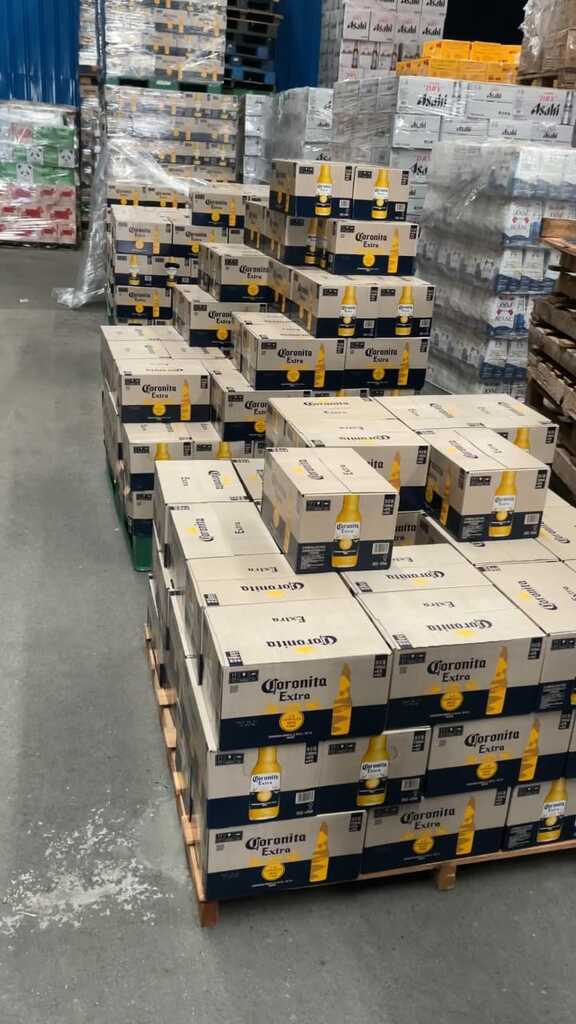
Why Japan Functions as Strategic Anchor for Asia Premium Beer Wholesale (コロナエキストラ 業務用)
Japan’s import beer market operates with structural characteristics that make it an ideal coordination hub for broader Asia wholesale operations. The country maintains rigorous quality verification processes, expects complete documentation accuracy, and demands adherence to specified delivery schedules. These requirements create a natural filtering system that elevates supplier standards across connected supply chains throughout the region.
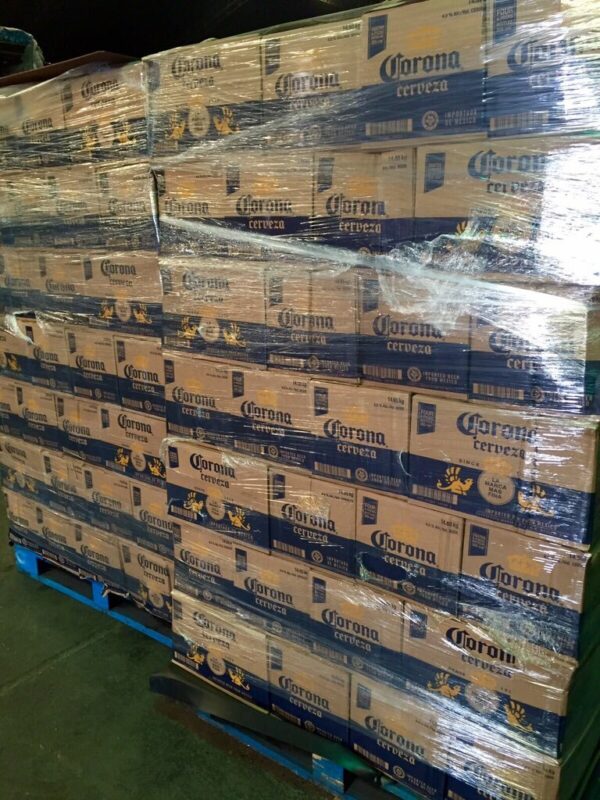
Demand for imported premium beer in Japan remains stable across economic cycles due to established consumer preferences and hospitality sector requirements. Corona Extra occupies a recognized position within this import category, supported by decades of brand presence and consistent marketing investment. This stability allows wholesale buyers to forecast inventory needs with greater accuracy compared to markets where import beer consumption fluctuates dramatically with seasonal or economic factors.
Precision Market Requires Precision Supply
Japan’s import infrastructure demands exact documentation, confirmed specifications, and reliable delivery execution. We coordinate Corona wholesale supply to match these standards through verified sourcing and transparent process communication.
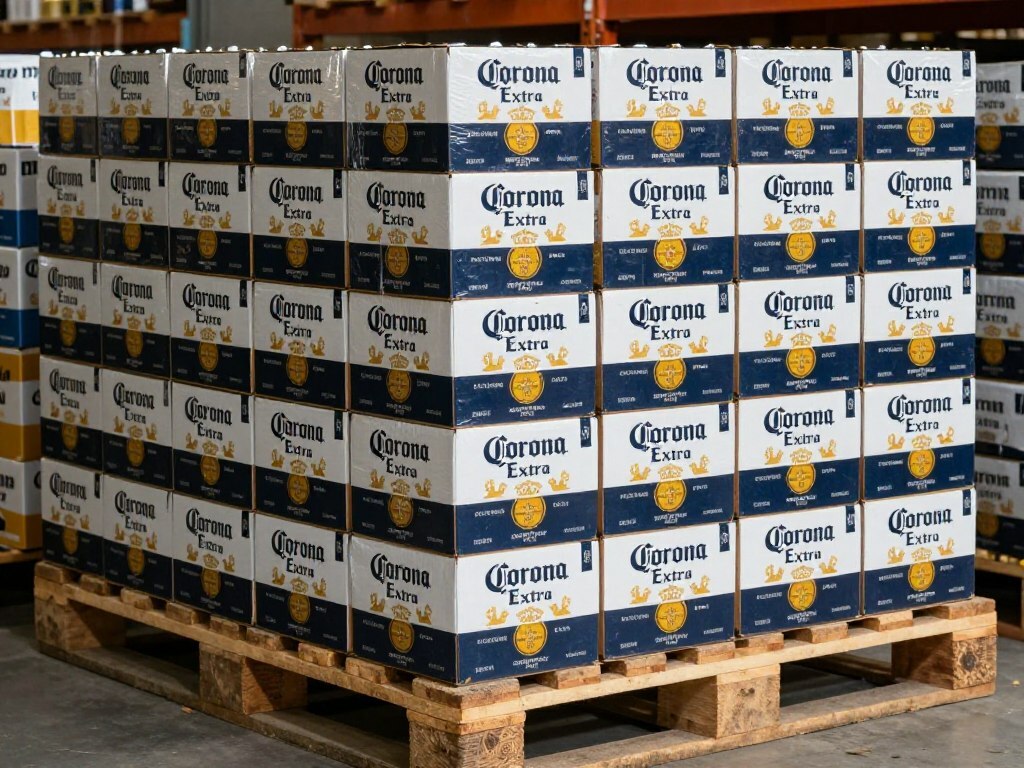
Distribution expectations in Japan extend beyond basic delivery logistics. Importers require suppliers who understand carton labeling requirements, pallet configuration standards for Japanese warehouse systems, and communication protocols that align with local business practices. Our coordination model addresses these operational details while maintaining the flexibility needed to serve parallel wholesale channels in Southeast Asia and other Pacific markets.
Predictable reorder behavior distinguishes Japan from emerging beer markets. Established distribution networks and stable hospitality demand create regular replenishment cycles that allow wholesale buyers to optimize cash flow and minimize excess inventory holding costs. For suppliers coordinating container-level shipments, this predictability enables better production planning and more efficient logistics scheduling across multiple destination markets. Share your estimated volume and destination port to coordinate efficient shipment planning that aligns with Japan’s import infrastructure requirements.
Corona Extra Format Specifications and Export Configuration Overview
Format selection impacts every aspect of wholesale beer coordination from pallet stacking efficiency to end-market pricing strategy. Corona Extra wholesale supply typically involves two primary glass bottle formats, each with specific handling requirements and market positioning considerations. Understanding format differences helps importers align purchasing decisions with their distribution channel mix and storage capacity constraints.
| Format | Market Positioning | Export Handling Note |
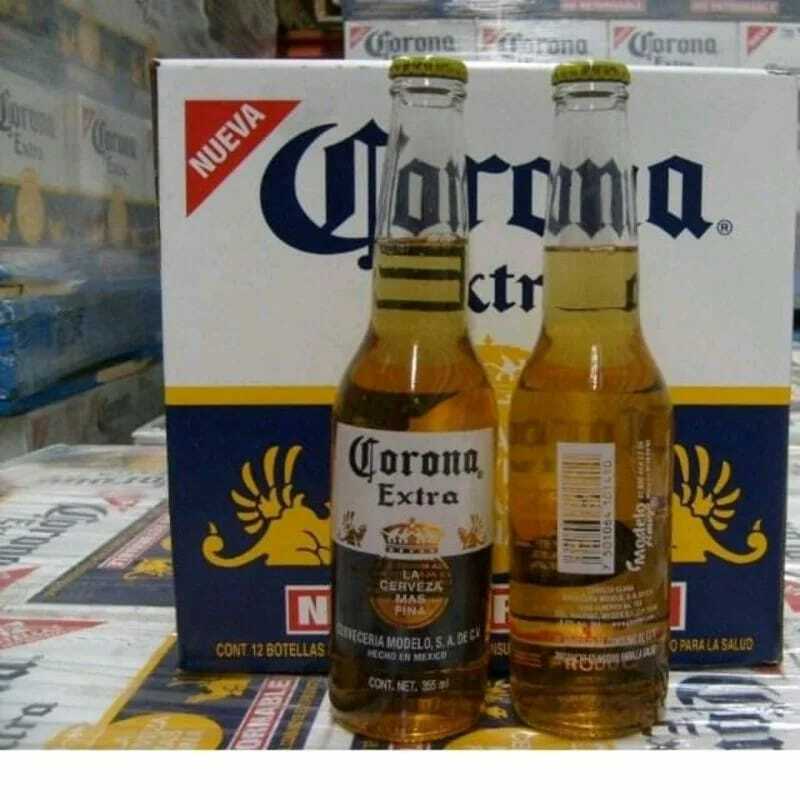
| 330ml glass bottle | Standard retail and hospitality format across Asia markets | Export cartons configured for stable pallet stacking with corner protection |
| 355ml glass bottle | Global standard format common in Americas and select Asia markets | Requires careful pallet configuration to maintain stability during container transit |
The 330ml format dominates retail and on-premise channels throughout Japan and most Asia markets due to established serving size preferences and pricing psychology. This format typically ships in 24-bottle cartons designed for manual handling and retail display compatibility. Wholesale buyers focusing on hospitality distribution generally prioritize this format for its alignment with standard serving practices and customer expectations.
Container planning begins with format confirmation because bottle dimensions directly affect pallet layer configuration and overall container utilization rates. Mixed format shipments require additional coordination to ensure proper weight distribution and prevent carton damage during transit. Most wholesale buyers optimize container costs by standardizing on single formats per shipment, particularly for initial orders where distribution channel performance remains unproven.
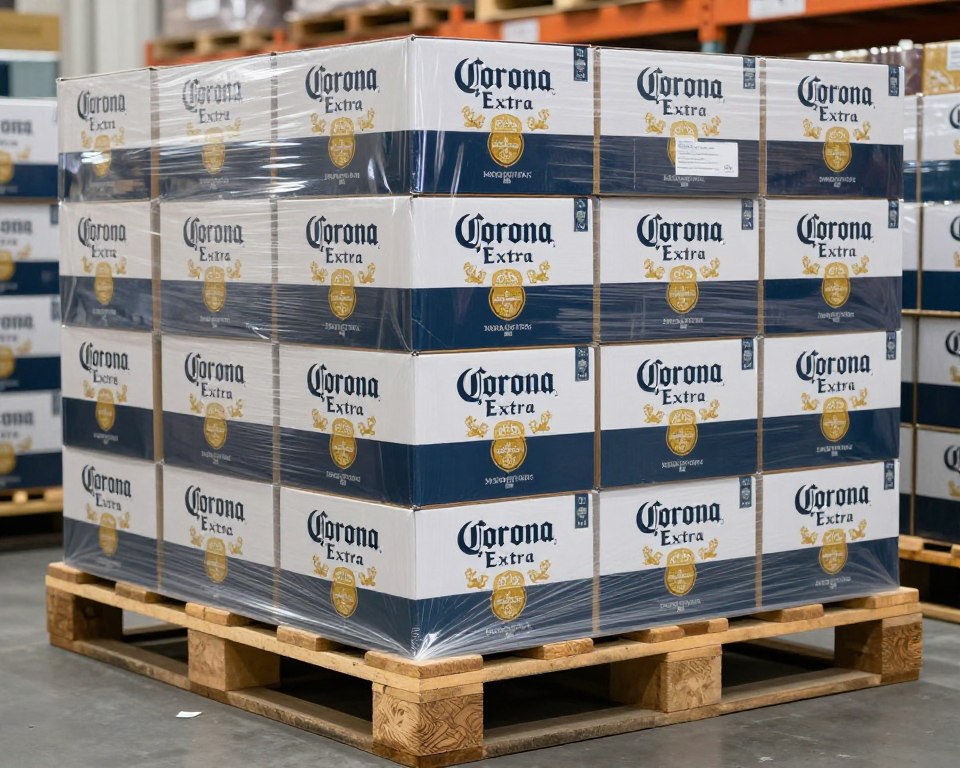
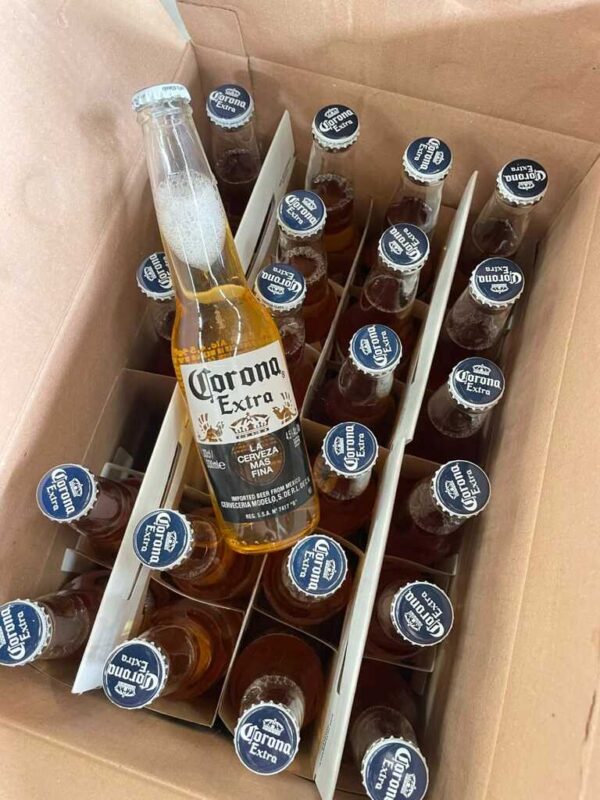
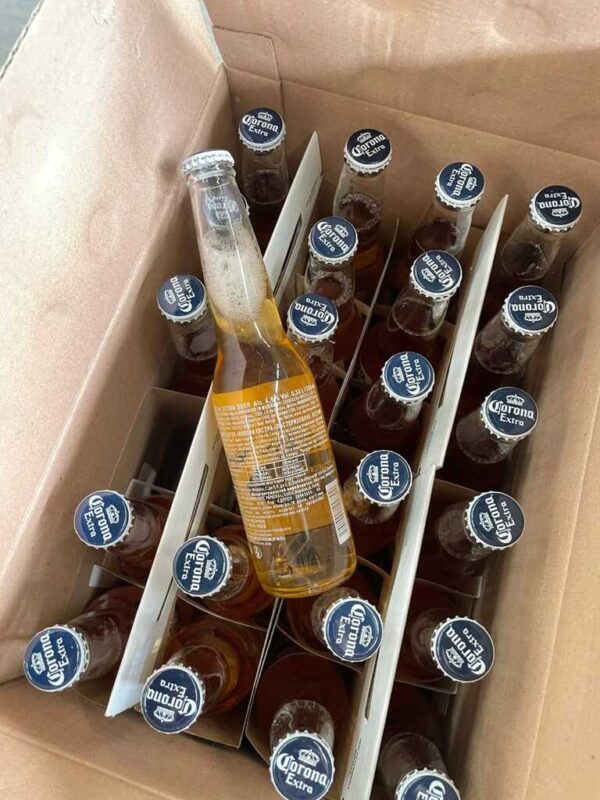
Glass bottle products demand specific handling protocols throughout the supply chain. Export cartons incorporate internal dividers to prevent bottle-to-bottle contact, corner reinforcement to protect against impact damage, and moisture-resistant materials to maintain integrity across climate variations. These packaging specifications add weight and volume compared to aluminum can alternatives, requiring careful consideration during container load planning and freight cost estimation.
Packaging Integrity and Pallet Configuration Discipline for Glass Bottle Beer Wholesale
Glass bottle protection begins with carton engineering and extends through every handling point from production facility to destination warehouse. Export cartons for Corona Extra use corrugated materials rated for international shipping stress, with internal structures designed to absorb shock and prevent movement during container transit. This packaging investment protects product value but requires corresponding attention to pallet stacking techniques that maintain carton integrity.
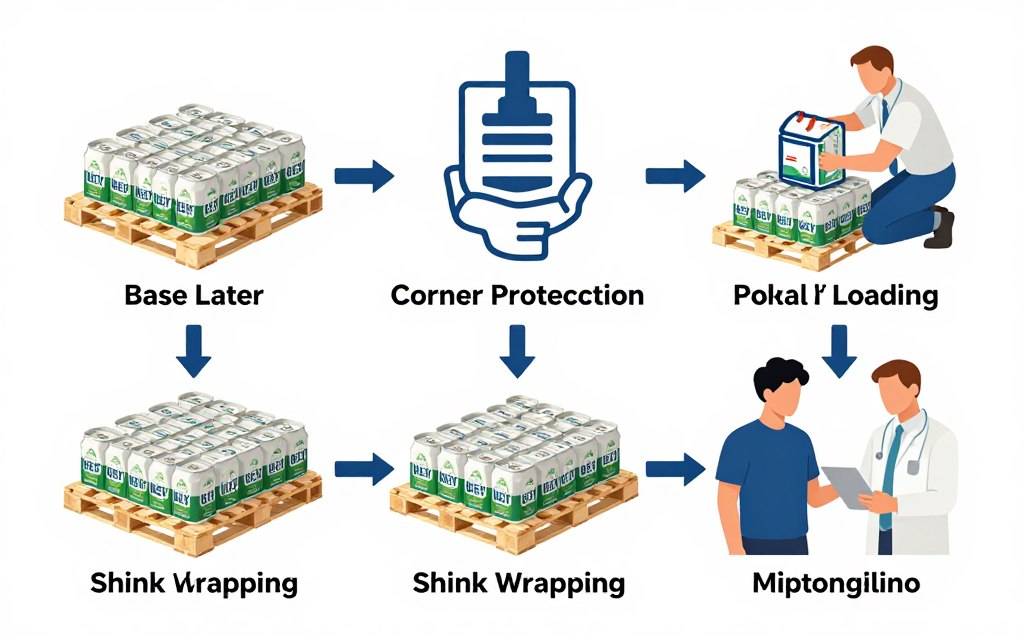
Carton integrity failures typically occur at pallet layer transitions where uneven weight distribution creates pressure points. Proper stacking discipline requires consistent carton alignment, attention to weight concentration patterns, and appropriate use of edge protectors and stretch film. These details may seem minor but directly impact the percentage of damaged goods that wholesale buyers encounter upon container arrival.
Critical Stacking Factors
- Base pallet condition and load-bearing capacity verification
- First layer alignment establishing pattern for entire stack
- Corner protection preventing carton compression damage
- Stretch film tension maintaining stack cohesion without crushing
- Load height limits preventing top-layer carton collapse
Container Environment Considerations
- Temperature fluctuations affecting carton material strength
- Humidity exposure impacting corrugated board integrity
- Transit movement creating lateral stress on stacked pallets
- Container door operations introducing handling shock
- Discharge coordination affecting final delivery condition
Stable stacking configurations maximize container utilization while protecting product quality. Standard 20-foot and 40-foot containers accommodate specific pallet quantities based on format, carton dimensions, and stacking height limits. Wholesale coordination includes calculating these parameters to provide accurate per-container volume projections and identify opportunities for load optimization across mixed product shipments.
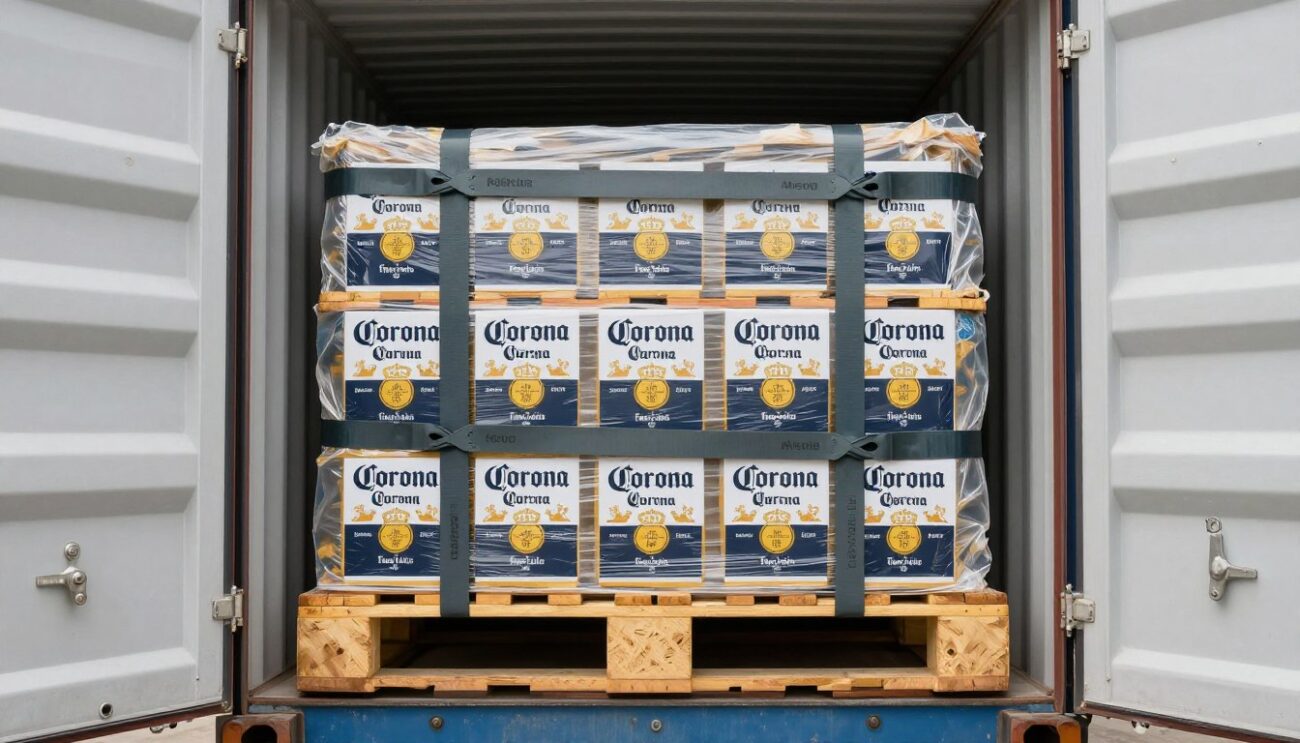
Container optimization extends beyond simple volume calculations. Weight distribution affects transportation costs and handling safety throughout the logistics chain. Front-loading heavier products or creating unbalanced configurations can result in rejected loads or additional charges at origin ports. We coordinate container loading patterns that comply with international shipping standards while maximizing the economic efficiency of each shipment.
Container Volume Planning and Asia Regional Coordination Framework
Shipment planning for wholesale beer supply requires alignment across production scheduling, logistics booking, and destination market requirements. Container volumes typically start at full container loads rather than partial shipments due to the cost structure of international freight and customs processing. For Japan importers, this means coordinating volumes that justify container dedication while matching warehouse capacity and distribution velocity.
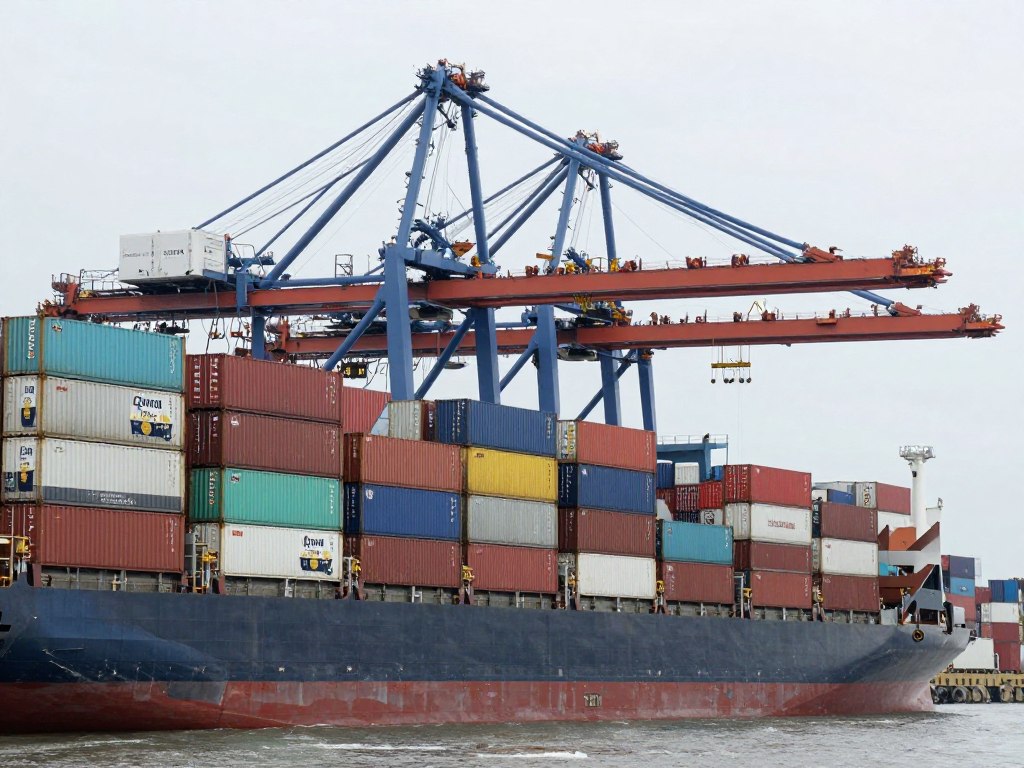
Port alignment impacts both logistics costs and delivery timeline reliability. Major Japanese ports maintain regular container service from multiple origin points, but frequency varies by shipping line and seasonal demand patterns. We coordinate shipment scheduling based on confirmed vessel availability and realistic transit time expectations rather than optimistic projections that create downstream complications for importers.
Planning Sequence
- Format and volume confirmation establishing baseline requirements
- Destination port specification determining routing options
- Delivery window discussion aligning with importer receiving capacity
- Production coordination confirming manufacturing lead time
- Booking execution securing container space and vessel schedule
Volume coordination for Japan often connects with broader Asia wholesale strategies. Importers managing distribution across multiple markets can optimize logistics costs by coordinating consolidated shipments with regional transshipment. This approach requires careful documentation planning and awareness of varying import regulations across destination countries.
Batch discipline matters for quality consistency across wholesale orders. Large volume shipments may draw from multiple production runs, requiring attention to date coding and rotation protocols. We coordinate with importers to establish batch management approaches that align with their distribution velocity and customer expectations regarding product freshness.
International commercial terms define responsibility transfer points and cost allocation between supplier and buyer. The most common terms for wholesale beer shipments include FOB (Free on Board) and CIF (Cost, Insurance, Freight), each with specific implications for logistics coordination and financial planning. Understanding these terms helps importers accurately forecast total landed costs and structure payment schedules that align with cash flow management objectives. For detailed explanations of international commercial terms and their applications in wholesale trade, reference the official Incoterms standards published by the International Chamber of Commerce.
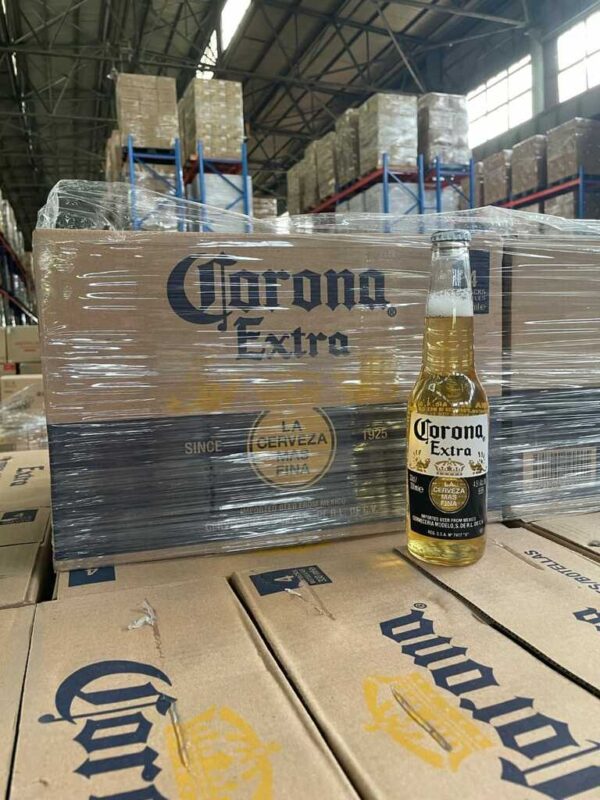
Asia coordination extends beyond Japan’s immediate import requirements. Distributors operating across Southeast Asia markets often seek suppliers who can manage parallel supply chains with consistent product specifications and synchronized delivery schedules. Our Vienna-based coordination capability supports these multi-market strategies through centralized communication and documentation management that simplifies complexity for wholesale buyers managing regional operations. Contact us with your estimated container volume and preferred Asia destination ports to discuss coordinated supply options that align with your regional wholesale strategy.
Brand Demand Stability and Hospitality Channel Rotation Dynamics
Corona Extra maintains stable demand patterns across Japan’s premium beer segment due to established brand recognition and consistent marketing support. This stability provides wholesale buyers with predictable rotation cycles that reduce inventory holding risks compared to emerging brands with unproven consumer acceptance. For importers evaluating supplier relationships, brand strength translates directly to cash flow reliability and reduced markdown pressure.
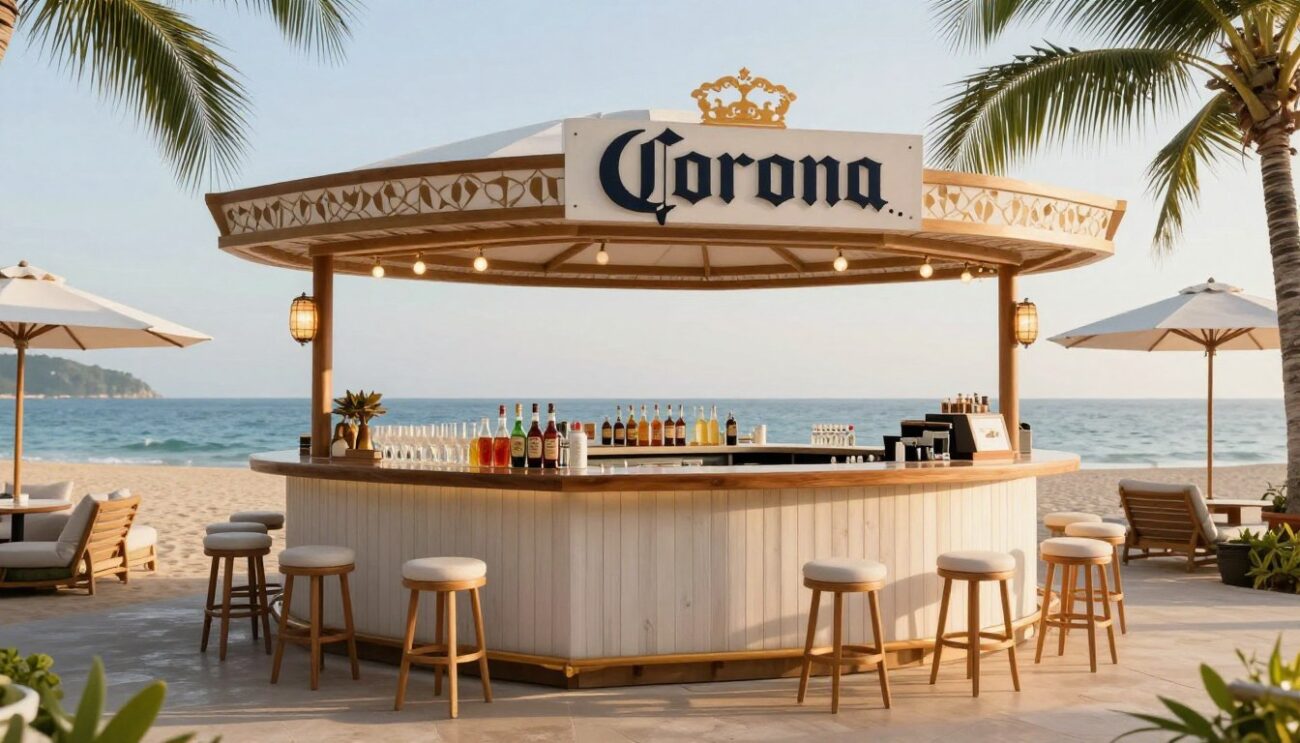
The beach lifestyle appeal associated with Corona resonates strongly across Asia’s coastal markets and urban centers with beach club cultures. This positioning creates natural demand in hospitality venues targeting international clientele and local consumers seeking premium import experiences. Beer brand positioning influences wholesale success because it determines the price points buyers can maintain and the customer segments they can access with confidence.
Brand demand protects wholesale cash flow by ensuring consistent product movement through distribution channels. When imported beer maintains steady consumption patterns, wholesale buyers face less pressure to discount inventory or absorb dead stock costs. Corona’s decades of market presence across Asia creates consumer familiarity that supports regular reorder cycles rather than unpredictable boom-and-bust patterns common with trend-dependent beverage products.
Reorder cycle predictability allows wholesale buyers to optimize inventory investment and negotiate better payment terms with retail and hospitality customers. When distribution partners trust that products will rotate consistently, they maintain regular purchase schedules that create stable revenue streams for importers. This reliability becomes particularly valuable during economic uncertainty when buyers scrutinize inventory risks more carefully and reduce exposure to unproven brands.
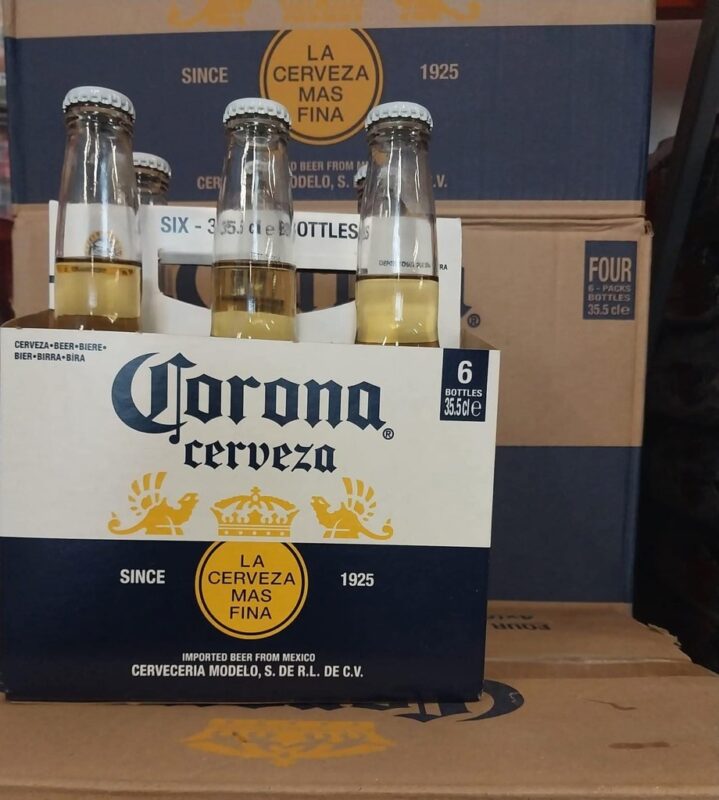
Rotation Velocity Indicators
Hospitality venues serving Corona typically maintain 2-4 week inventory cycles during peak seasons, with slower rotation during off-peak periods. Retail channels experience more consistent rotation patterns driven by regular shopping behaviors. Understanding these velocity differences helps wholesale buyers allocate inventory efficiently across channel mix.
Import premium perception supports pricing stability that protects wholesale margins. Corona’s positioning as an established international brand allows distributors to maintain price points that reflect import costs and logistics investment. This pricing stability contrasts with commodity beer categories where intense competition compresses margins and forces wholesale buyers to compete primarily on cost rather than service value or distribution capability.
Connected Asia Wholesale Intelligence and Regional Market Coordination Resources
Our Corona wholesale coordination expertise extends across multiple Asia-Pacific markets where we support importers with similar bulk supply requirements and container planning challenges. Understanding regional wholesale patterns helps buyers benchmark their operations and identify opportunities for expansion into adjacent markets with comparable import infrastructure and demand characteristics.
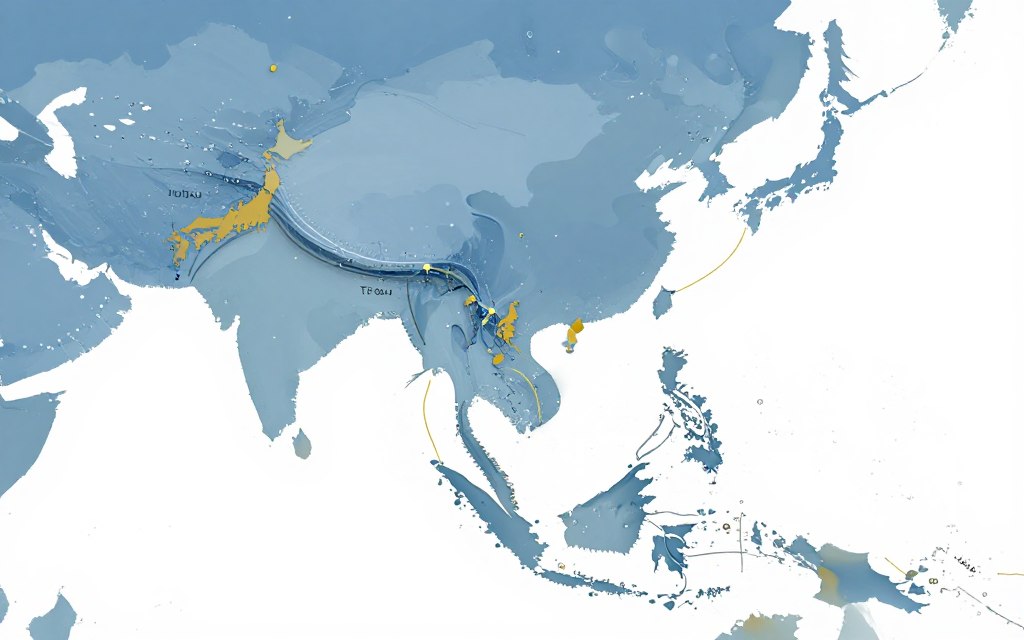
The Philippines wholesale beer market shares several characteristics with Japan’s import environment, including strong hospitality demand and established distribution networks in major urban centers. We coordinate Corona beer bulk supply for Filipino importers managing multi-island distribution strategies that require careful volume planning and logistics coordination across complex geography.
Latin American markets represent growing opportunities for wholesale beer importers seeking to supply expatriate communities and consumers exploring international beer categories. Our coordination support extends to Chilean wholesale distribution channels and Peruvian import operations, where we help buyers navigate format preferences and container planning considerations specific to South American market requirements.
Southeast Asia Coordination
Vietnam’s emerging premium beer segment creates opportunities for importers establishing early market positions before competition intensifies. We provide volume coordination support for Vietnamese wholesale buyers managing Ho Chi Minh City and Hanoi distribution from centralized import operations.
- Container consolidation across multiple destination ports
- Documentation coordination for varying import requirements
- Format mix optimization across different market preferences
Global Wholesale Frameworks
International wholesale buyers coordinating multi-country operations benefit from understanding standardized approaches to bulk beer supply. Our global Corona wholesale coordination framework addresses common challenges across different import environments while accommodating local regulatory and logistics variations.
- Container volume planning methodologies
- Payment structure standardization approaches
- Quality verification and batch management protocols
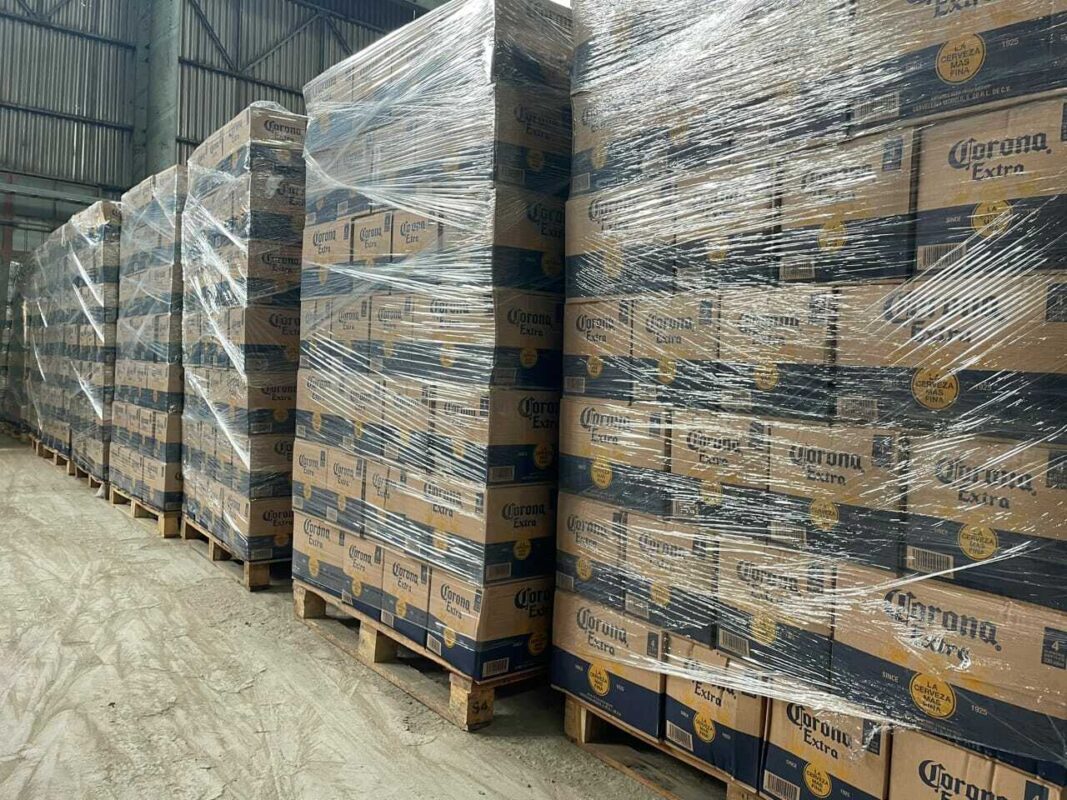
Corona brand consistency across global markets simplifies multi-country wholesale strategies. Product specifications, packaging standards, and quality expectations remain consistent regardless of destination market, reducing the complexity that importers face when managing diverse supplier relationships. This standardization allows wholesale buyers to focus operational attention on logistics optimization and market development rather than product specification management.
For comprehensive product information and brand positioning details, visit the official Corona beer wholesale product overview where we maintain current specifications, format availability, and coordination guidelines. Additional brand background is available through Corona’s official product information and AB InBev’s brand portfolio documentation.
Payment Framework and Order Coordination Structure (ビール 輸入 卸)
Wholesale payment structures for container-level beer shipments typically follow established international trade patterns designed to balance supplier risk and buyer cash flow management. We coordinate Corona Extra wholesale supply using a standard framework that requires advance payment covering production and initial logistics costs, with balance settlement against shipping documentation or according to structured credit arrangements for established trading relationships.
Direct Wholesale Coordination Contact
For detailed payment structure discussion and order coordination specific to your volume requirements and destination market, contact our Vienna coordination office directly.
The standard payment approach allocates fifty percent as advance payment upon order confirmation, with the remaining fifty percent payable against bill of lading presentation or according to agreed documentary credit terms. This structure protects both parties by ensuring supplier commitment to production scheduling while providing buyers with documentation security before final payment release. Variations to this framework can be discussed based on order volume, relationship history, and specific market circumstances.
We do not publish pricing schedules or minimum order quantities in general marketing materials because wholesale beer costs fluctuate based on production timing, logistics rates, and currency movements. Accurate pricing requires discussion of specific volume parameters, delivery timeline, and destination port to provide projections that reflect current market conditions. This approach prevents misunderstandings that can occur when buyers make decisions based on outdated or generic price information not applicable to their specific circumstances.
Frequently Asked Questions – Corona Extra Wholesale Supply Coordination
Can different bottle formats be mixed within a single container shipment?
Mixed format containers are technically possible but require additional coordination to ensure proper pallet configuration and weight distribution. Most wholesale buyers optimize container costs and logistics efficiency by standardizing on single formats per shipment, particularly for initial orders. Mixed formats make more sense for established importers with proven distribution channels for multiple product specifications.
How are export cartons prepared to protect glass bottles during long-distance container shipment?
Export cartons incorporate corrugated materials rated for international shipping stress, internal bottle dividers preventing glass-to-glass contact, corner reinforcement protecting against impact damage, and moisture-resistant construction maintaining integrity across climate variations. Pallet wrapping with appropriate stretch film tension and edge protection provides additional security during transit and handling operations.
How is product freshness protected during international shipment and storage coordination?
Corona Extra maintains quality stability throughout normal international shipping timeframes when stored according to standard warehouse conditions. We coordinate shipments using established production batches with appropriate remaining shelf life for destination market requirements. Proper container environment management and timely customs clearance protect product condition during the import process.
Is pallet loading optimized for maximum container utilization efficiency?
Container optimization involves calculating pallet quantities based on specific format dimensions, carton configurations, and stacking height limits that maintain product integrity. We coordinate loading patterns that maximize volume utilization while complying with weight distribution requirements and international shipping standards. Exact container capacities vary based on format selection and pallet specifications.
How long does wholesale coordination take after order confirmation and advance payment?
Timeline depends on production scheduling availability, destination port routing options, and customs processing requirements at origin and destination. Typical coordination spans eight to twelve weeks from order confirmation through container arrival at destination port. Rush coordination may be possible with premium logistics arrangements, though this impacts overall supply costs and requires early discussion during planning stages.
Initiate Corona Extra Wholesale Coordination for Japan Import Operations
We coordinate Corona Extra wholesale supply for Japan importers and Asia regional distributors who operate at container volume levels and understand pallet-level trading requirements. Our coordination model serves wholesale buyers seeking reliable sourcing partnerships rather than transactional supplier relationships. This approach prioritizes process transparency and communication consistency throughout multi-month supply cycles.
Zeki Frucht GmbH coordinates from Vienna, Austria, serving as a connection point between confirmed wholesale orders and appropriate production sourcing. We do not claim official distributor status or exclusive territory arrangements. Our coordination capability focuses on volume planning, documentation management, and logistics scheduling for established import businesses with proven distribution networks.
Begin Wholesale Coordination Discussion
Share these four coordination elements to initiate accurate planning and timeline projection:
- Format preference – 330ml or 355ml glass bottle specifications
- Estimated volume – Container quantity or pallet count projections
- Destination port – Primary import location in Japan or connected Asia market
- Time window – Target delivery period or operational urgency level
Contact our coordination office with these parameters to receive specific planning guidance aligned with your wholesale operation requirements and market positioning objectives.
Japan wholesale coordination connects with broader Asia supply strategies for distributors managing multi-market operations. Our experience across Philippines, Vietnam, Chile, Peru, and other regional markets provides perspective on comparative logistics challenges and format preference patterns that inform efficient coordination decisions. We serve buyers who value process knowledge alongside basic sourcing capability.