
Schweppes wholesale Japan buyers need to compare more than the price of a single tonic-water case. Japan’s trade market includes 250 ml glass bottles packed in cases of 24, while a separate Japanese distributor lists a 250 ml, 24-can format. Both contain six litres of beverage per documented case, but they are not interchangeable for freight handling, labelling or purchasing specifications.
Zeki Frucht GmbH evaluates qualified Schweppes sourcing requests for commercial buyers who need the correct drink variant, container type, shipping configuration and agreed destination requirements.
JAPAN: Documented 250 ml glass-bottle case.
CAN FORMAT: Separate 250 ml × 24-can trade listing.
REGIONAL SCOPE: Japan-first, with selected East Asian pack comparisons.
Schweppes Cans, Glass Bottles and PET: Choosing the Correct Format
Selecting the right container configuration requires balancing destination presentation standards against physical logistics constraints. Beverage buyers in Japan operate across distinct trade channels where glass, aluminium and plastic serve fundamentally different operational roles.
Glass Bottles
Japanese trade records document 250 ml glass bottles packed 24 units per case, delivering exactly 6.00 litres of beverage. This format provides classic bar presentation and superior rigidity, but requires robust carton dividers, careful breakage prevention and higher gross transport weight per pallet layer.
Aluminium Cans
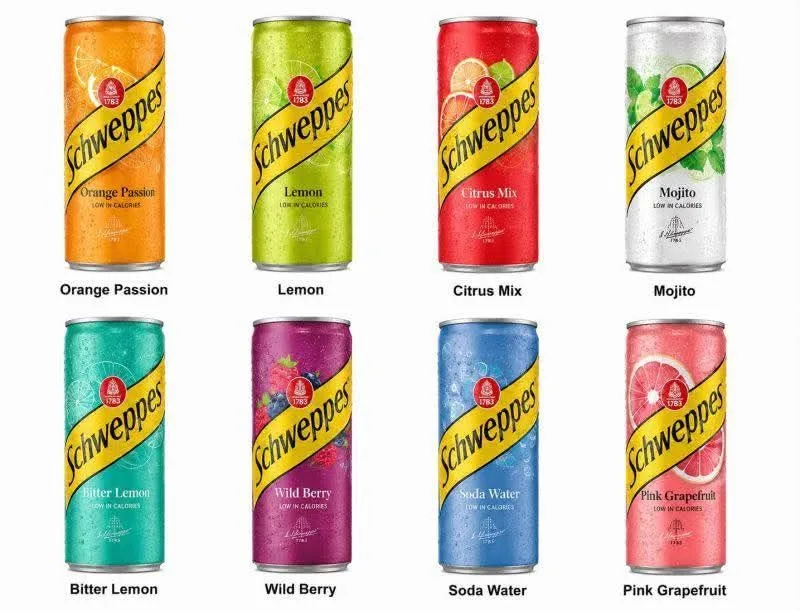
Independent distributor listings in Japan record a 250 ml can packed in 24-unit cartons, yielding identical liquid volume at 6.00 litres. Procurement teams must inspect outer carton integrity, dent resistance, barcode printing, batch codes and exact ingredient formulation, which may vary from bottled stock.
PET Bottles
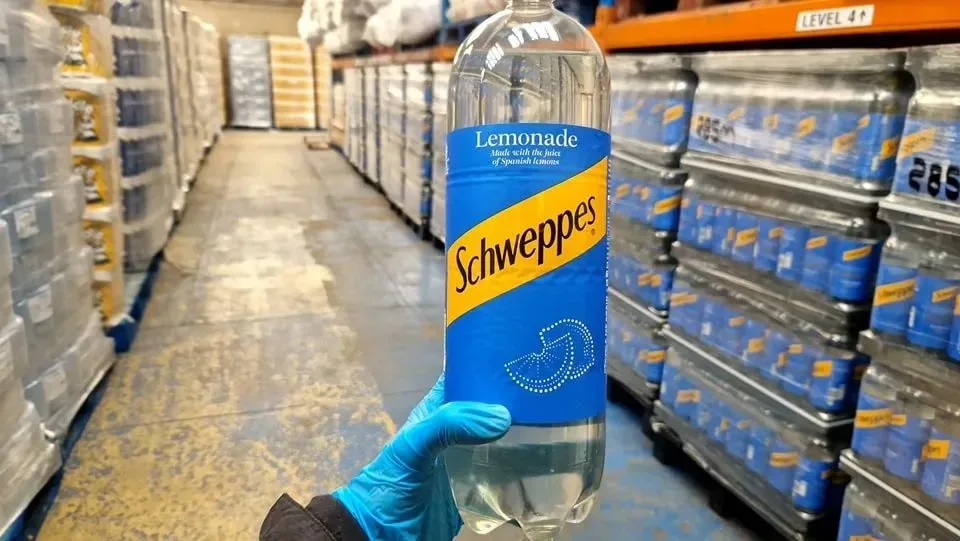
Regional brand portfolios in Hong Kong document PET options, such as 410 ml Soda Water bottles designed for retail mobility and resealable use. Plastic containers eliminate shatter risks but display different gas retention profiles and pallet crush tolerances compared to aluminium or glass.
Which Schweppes Products Should Wholesale Buyers Specify?
Commercial mixer orders depend on establishing precise technical descriptions for each stock-keeping unit. Buyers should never submit generic product names when requesting commercial allocations across international borders.
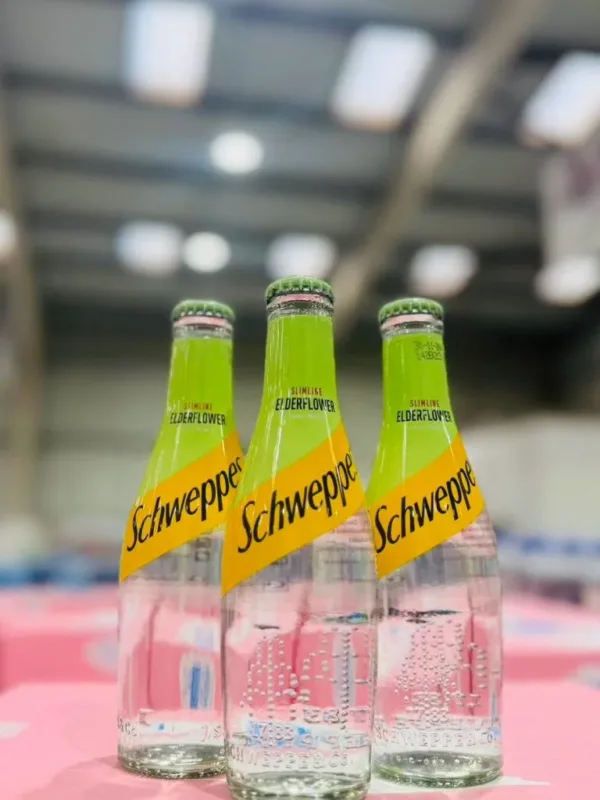
Schweppes Tonic Water
Available in Japanese commercial listings as a 250 ml glass bottle and a 250 ml can, both packed 24 units per case. Buyers must verify whether domestic Japanese recipes or overseas Indian Tonic formulations are required, as sweetener profiles and bittering agents differ by regulatory market.
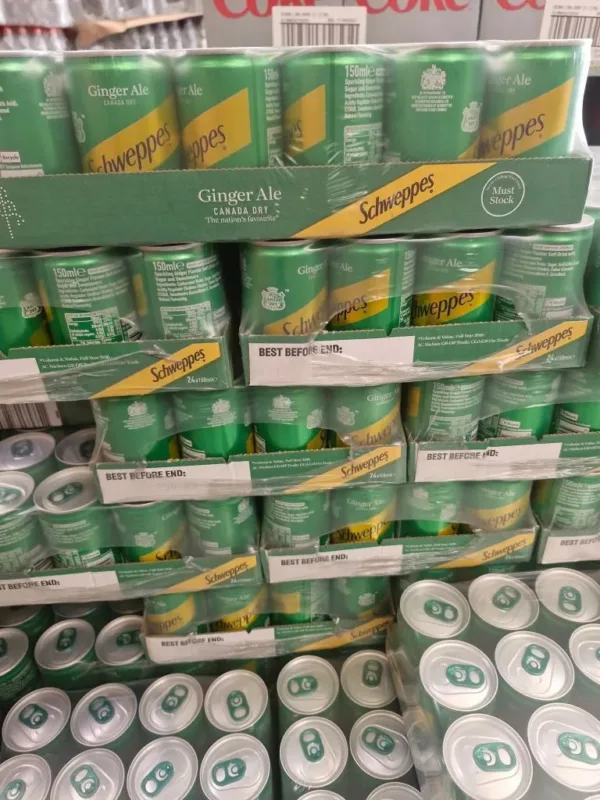
Schweppes Dry Ginger Ale
Regional documentation records a 330 ml can format in Taiwan and a 200 ml can format in Hong Kong. Commercial buyers should distinguish mild, aromatic Ginger Ale from cloudy Ginger Beer, which contains distinct spice profiles and different ingredient classifications.
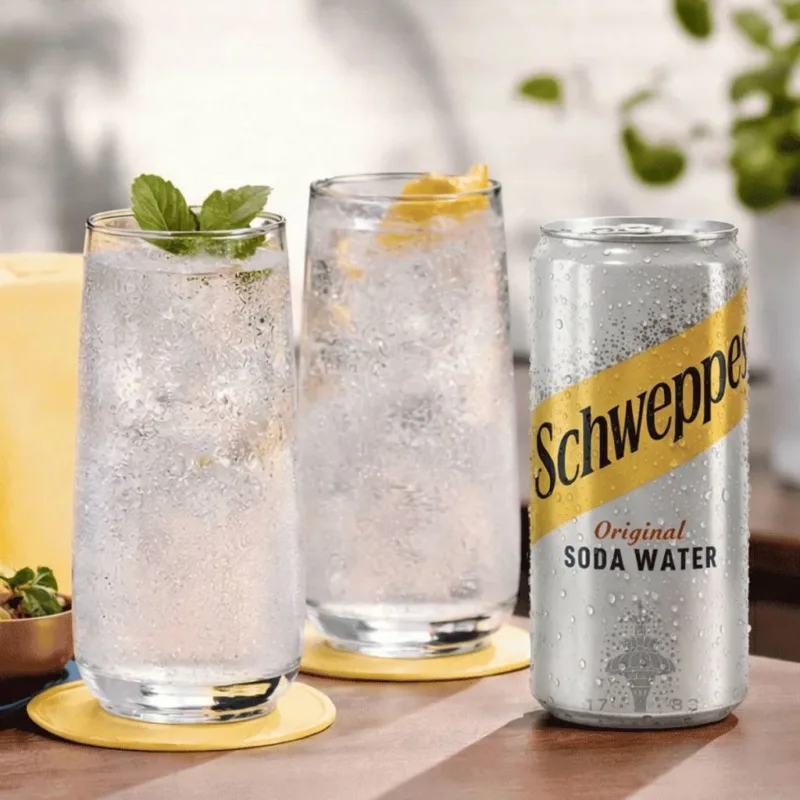
Schweppes Soda Water
Hong Kong official brand documentation identifies 200 ml cans, 330 ml cans and 410 ml PET bottles. Formulated with carbonated water and sodium bicarbonate, this neutral mixer serves bar operations and must never be substituted for quinine-containing tonic water.
Documented regional portfolios also display speciality formulations, such as lime-flavoured sparkling variants in selected Asian markets. Buyers must identify unit volume, container material and target market documentation before placing cross-border purchase orders.
Schweppes Brand Presentation: Ginger Ale in Commercial Context
Brand positioning campaigns illustrate how premium carbonated mixers are presented within commercial hospitality and retail environments. Promotional broadcasts highlight consumer-facing bottle aesthetics and contemporary serve rituals.
Schweppes Ginger Ale brand campaign published by Grupo Peñafiel, shown for product-presentation context.
This brand broadcast originates from Grupo Peñafiel in the Mexican market, illustrating international Ginger Ale product positioning. It represents regional brand marketing rather than Japanese-market advertising and does not demonstrate product availability in Japan.
Schweppes Shipping Cases: Japan and East Asia Specifications
Case configurations vary significantly across Asian distribution channels, affecting carton cubic volume and total container payloads. Purchasing departments must verify exact manufacturer specifications rather than assuming uniform case counts.
| Territory | Variant | Container | Unit Volume | Case Count | Net Case Volume | Verification Note |
| Japan | Tonic Water | Glass bottle | 250 ml | 24 units | 6.00 L | Documented in Japanese bar supply trade records from Bar-Proshop. |
| Japan | Tonic Water | Aluminium can | 250 ml | 24 units | 6.00 L | Recorded in distributor packaging documentation by Provenance Japan. |
| Taiwan | Tonic Water | Aluminium can | 330 ml | 24 units | 7.92 L | Documented across regional distributor listings on Hengjo Taiwan. |
| Hong Kong | Tonic Water | Aluminium can | 200 ml | Unconfirmed | Variable | Case count requires verification against active trade lots from Coca-Cola Hong Kong. |
| Hong Kong | Tonic Water | Aluminium can | 330 ml | Unconfirmed | Variable | Format officially listed; outer case packaging count must be verified per quotation. |
| Hong Kong | Soda Water | PET bottle | 410 ml | Unconfirmed | Variable | Speciality resealable bottle requiring confirmation of export carton grouping. |
Mathematical calculations demonstrate practical freight implications: a 24 × 250 ml case delivers 6.00 litres of liquid, whereas a 24 × 330 ml case holds 7.92 litres, creating an increase of 1.92 litres per carton. However, shipping weight calculations must account for container tare weight, because glass bottles add substantial gross packaging mass compared to lightweight aluminium.
How Japan’s Established Schweppes Supply Affects Import Decisions
Schweppes mixers are established within Japan’s commercial beverage supply chains through domestic bottling infrastructure. Independent importers should analyse the local supply framework before considering offshore procurement.
Japan’s beverage network features domestic manufacturing and regional distribution governed through the Coca-Cola Bottlers Japan system. Standard consumer enquiries and brand allocations are detailed via the Coca-Cola Japan product reference.
Independent overseas sourcing offers a viable commercial solution only when local domestic channels cannot supply specific volumes, container formats or recipe variations. Procurement managers should review whether the required unit format exists in domestic inventory, evaluate total landed costs including customs tariffs, and verify that the proposed batch meets all regulatory standards before booking cross-border freight.
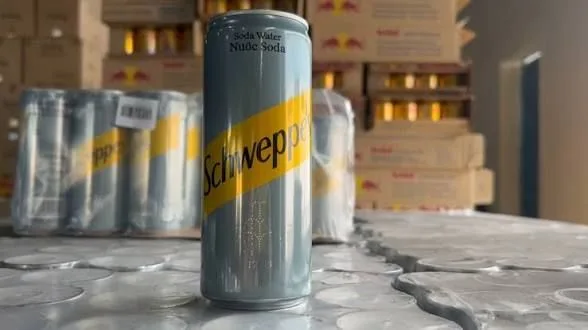
Japan, Taiwan and Hong Kong: Different Schweppes Buying Specifications
Regional bottling agreements throughout East Asia create distinct packaging configurations and ingredient standards across neighbouring territories. Cross-border buyers cannot treat regional stock as interchangeable.
- Documented 250 ml glass bottles optimised for premium bar presentation.
- Documented 250 ml cans tailored to local vending and bar trade channels.
- Specific domestic formulation complying with Japanese Food Sanitation standards.
- Full Japanese-language mandatory consumer labelling applied at source or import.
Japan Market Standards
- Taiwan listings feature 330 ml cans of Tonic, Soda and Ginger Ale via Coca-Cola Taiwan.
- Hong Kong lists compact 200 ml and standard 330 ml cans alongside 410 ml PET.
- Formulations reflect local market sweetener and preservative authorisations.
- Traditional Chinese retail typography requiring supplementary Japanese labelling for import.
Taiwan & Hong Kong Formats
Commercial buyers seeking alternative case layouts across different trading territories can compare these East Asian parameters against Schweppes wholesale case formats for Gulf importers to observe how packaging groups differ internationally. Each trading territory enforces distinct labelling legislation, container deposit requirements and product formulations.
Importing Schweppes into Japan: Labels, Ingredients and Documentation
Bringing commercial soft drinks into Japan requires strict compliance with statutory import clearance procedures. Food and beverage shipments are inspected to protect consumer safety under national regulations.

- Import Notification: Commercial food and beverage shipments require advance notification to quarantine stations under the Ministry of Health, Labour and Welfare Food Sanitation Act.
- Mandatory Labelling: Retail packaging must display Japanese-language labelling compliant with guidelines from the Consumer Affairs Agency, detailing ingredients, net volume, best-before dates and importer identity.
- Additive Authorisation: Every sweetener, preservative, acidulant and bittering component must appear on Japan’s designated list of permitted food additives.
- Soft Drink Standards: Shipments must satisfy specific microbiological, chemical and manufacturing standards detailed in official JETRO soft-drink import guidance.
- Recipe Verification: Overseas formulations, particularly European Indian Tonic Water with specific quinine levels, must be verified individually against Japanese statutory thresholds.
Wholesale purchasers must review the manufacturer’s exact specification sheet and laboratory certificate before dispatch. Assuming foreign-market stock automatically satisfies Japanese regulatory criteria introduces significant risks of customs detention or rejection at the port of entry.
Verifying Schweppes Labels, Manufacturing Origin and Case Codes
International beverage sourcing requires distinguishing the registered brand owner from the physical bottling facility and the commercial distribution market. Schweppes operates through varied licensing agreements across Europe, Asia and the Americas.
The jurisdiction shown on a retail label indicates the commercial territory for which the drink was packaged, not necessarily the factory location where the liquid was canned or bottled. Wholesale documentation must trace physical batch codes and plant identification.
When reviewing commercial offers, procurement officers must confirm the retail Global Trade Item Number (GTIN), outer case barcode, production lot number and remaining shelf life upon port arrival. Verifying outer carton condition, moisture-barrier wrapping and gross pallet weight prevents receiving discrepancies across the supply chain.
Comparing Glass and Can Shipments on a Landed-Cost Basis
Equivalent liquid volume does not translate into identical logistics expenditure. Secondary packaging mass, container packing density and transport risks dictate final landed unit costs.
| Cost Factor | Glass Bottles (250 ml) | Aluminium Cans (250 ml) | Commercial Implication |
| Tare Weight | Heavy glass tare | Lightweight aluminium | Glass shipments reach container road-haul weight limits at lower volumetric fill. |
| Breakage Risk | Impact vulnerable | Dent risk only | Bottles require specialised transit insurance and internal cardboard divider protection. |
| Pallet Height | Rigid stacking | Cen-crush sensitive | Can pallets require precise top-load management to prevent lower-tier deformation. |
| Freight Density | Lower liquid yield | Higher liquid yield | Cans maximise total litres transported per international shipping container. |
Commercial contracts rely on standardised trade definitions established under the ICC Incoterms rules. When agreeing terms, parties must clearly identify whether pricing reflects handover at the dispatch facility under FCA, ocean delivery to major Japanese ports such as Tokyo or Kobe under CIF, or carriage paid to an inland consolidation depot under CPT.
Inside a Schweppes Bottling Plant: A Historical Production Visit
Industrial bottling plants operate high-speed automated lines designed to clean, fill, carbonate, seal and carton beverage containers under strict quality-control protocols. Factory footage provides valuable technical insight into large-scale production architecture.
Historical 2017 visit to the Schweppes Suntory plant in Toledo, Spain. The footage illustrates production infrastructure and does not identify the origin of a proposed shipment to Japan.
This documentary recording depicts an official visit to the Schweppes Suntory manufacturing plant in Toledo, Spain. The material illustrates European industrial bottling technology and does not imply that this Spanish facility produces Japanese-market allocations or supplies Zeki Frucht GmbH.
How to Request a Schweppes Wholesale Quotation for Japan
Zeki Frucht GmbH operates as an independent international B2B sourcing partner headquartered in Vienna, Austria. Wholesale beverage allocations are procured against confirmed commercial purchase orders rather than drawn from speculative stock holdings.
- Submit Detailed Request: The buyer provides complete product parameters, container formats, required case quantities and destination receiving port.
- Feasibility Assessment: Sourcing specialists verify active batch availability, packaging integrity, production origin and transport schedules.
- Technical Verification: Product labels, ingredient profiles, lot numbering and carton dimensions are audited against trade specifications.
- Commercial Quotation: A formal quotation is issued detailing the exact SKU, unit pricing, Incoterms and delivery parameters.
Commercial beverage buyers managing broad supply programs can source mixers alongside wholesale soft drinks and beverage products to consolidate pallet freight. Complete initial details reduce administrative delays and enable accurate freight assessment.
Frequently Asked Questions
What is the difference between Schweppes 250 ml glass and can formats?
Both documented Japanese trade formats contain 6.00 litres of beverage across 24 units, but glass bottles carry greater gross tare weight and require divider packaging for hospitality presentation. Aluminium cans offer lighter container tare, higher liquid density per shipping container and lower breakage vulnerability during transport.
Are the same Schweppes flavours and formulas available in every East Asian market?
No, brand portfolios and recipe formulations differ across regional territories. Taiwan officially lists 330 ml cans of Tonic, Soda and Ginger Ale, Hong Kong distributes 200 ml cans and 410 ml PET formats, and Japanese domestic lines follow distinct domestic taste preferences and food additive authorisations.
How can a buyer confirm bottles or cans per shipping case?
Carton unit counts must be confirmed directly on the official manufacturer specification sheet or commercial proforma invoice for that exact production lot. Buyers should never assume secondary packaging quantities match standard 24-count groupings without verified documentation.
What should a Japanese importer verify before bringing in a foreign-market Schweppes SKU?
Importers must verify that every ingredient and additive complies with Japan’s Food Sanitation Act through quarantine station notification. They must also confirm statutory Japanese-language labelling details and evaluate whether the total landed cost remains commercially viable.
What information does Zeki Frucht require for a wholesale quotation?
Enquiries must specify the exact drink variant, container material, unit volume, required case or pallet volume, destination port, preferred Incoterm, expected delivery window and minimum acceptable shelf life upon arrival.
Commercial Mixer Procurement for Japanese Trade
Procuring commercial allocations of Schweppes mixers requires disciplined evaluation of container materials, case weights, regional formulations and Japanese regulatory clearance. Aligning physical packaging dimensions with confirmed import documentation protects margins and supports smooth receiving operations across commercial distribution channels.
Commercial Sourcing Specification
Submit verified order parameters including flavour, packaging format, carton quantities and delivery port to receive an assessed commercial proposal.